The connection between coal-fuelled Nazi fighters & today’s diesel crisis
On May 12, 1944, the US Eighth Air Force flew bombers into central Germany with an unusual target list.
Welcome to the fourth edition of this American Capital series.
We started with a bankrupt republic that quickly built a reputation for paying its debts, and a quiet agreement under a Wall Street tree that produced the New York Stock Exchange.
For the 77 years that followed, individual states filled a national-bank-less vacuum by issuing thousands of private currencies of wildly uneven quality. Financial panics hit roughly every 20 years.
Then one catastrophic collapse in 1907, and one banker's response to it, finally forced the country’s hand.
In 1913, Congress built the Federal Reserve — an institution that could lend to failing banks in a crisis.
The Fed solved the panic problem. But it didn't solve everything.
Because the dollar itself was still tied to something the country didn't fully control: gold.
A gold standard is a simple idea.
A dollar isn't just paper — it’s a legal claim on a fixed weight of gold, redeemable on demand at a bank.
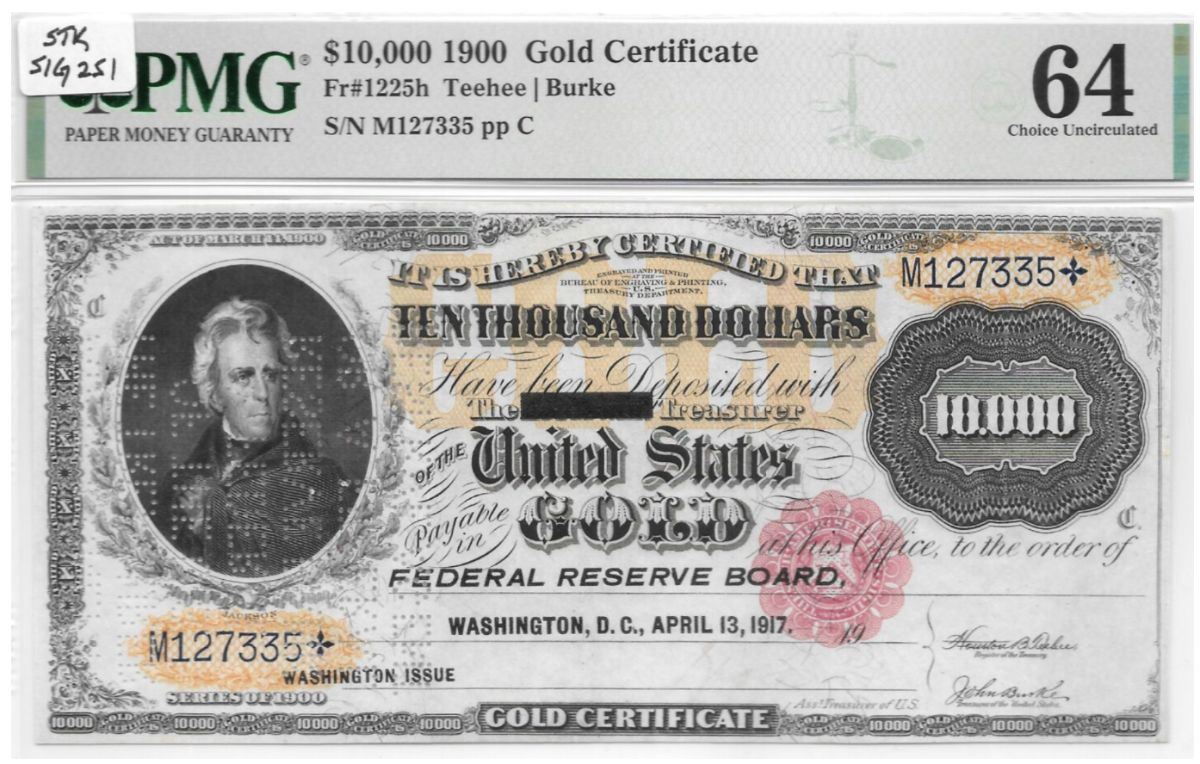
The US drifted toward this arrangement well before it was ever law. The Coinage Act of 1873 quietly demonetized silver, pushing the country onto a de facto gold standard. Critics later called this ‘the Crime of ‘73’. The Gold Standard Act of 1900 made it official.
For more than three decades, the promise held.
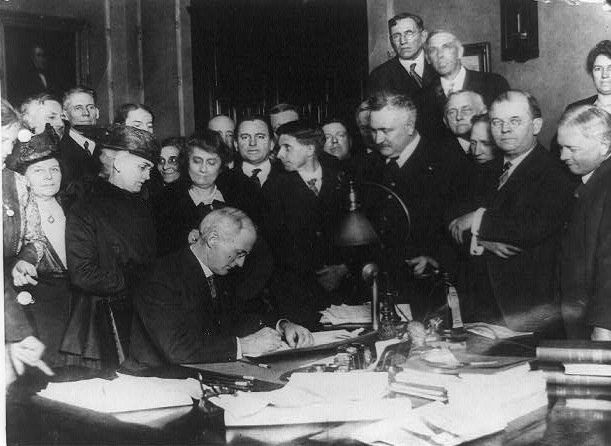
Then in 1933, in the depths of the Great Depression, President Roosevelt made it illegal for Americans to own monetary gold. Prices and wages were falling in a deflationary spiral. Economic activity, and of course growth, were stalling.
So citizens were forced to sell their coins and bullion to the government at $20.67 an ounce.
The government then promptly revalued gold to $35 an ounce — expanding the monetary base by executive order to stimulate activity, and quietly transferring wealth from ordinary Americans to the state in the process.
Then in 1944, at Bretton Woods, the wartime Allies rebuilt the whole system around that $35 figure.
Every global currency in the post-war world would peg to the dollar. The dollar alone would peg to gold. It made the US dollar the axis of the global economy — and made every other country's money supply, in effect, a bet on America’s gold reserves.
That bet ultimately went bad.
By 1971, the US had printed and spent far more dollars than it held in gold, and foreign governments knew it. On 15 August that year, President Nixon appeared on television and suspended the dollar's convertibility to gold — a move he called temporary.
It was permanent, of course. I've told the story of that night, and of the extraordinary man who executed it, here.
By the mid-1970s, the dollar was pure fiat — backed by nothing but trust in the government issuing it.
The decade that broke the dollar’s last link to anything solid was the same decade that pushed ordinary Americans towards owning a piece of the market themselves.
A currency with no fixed anchor is a currency that tends to quietly lose value through inflation.
At 3% inflation, for example, your dollar loses about a quarter of its value every decade.
This means a pension system promising fixed payouts decades from now suddenly looks a lot riskier to whoever's funding it — the payout stays the same number, but that number buys less every year.
The safer bet becomes giving people a stake in something that can rise with inflation instead of a promise that erodes against it.
In 1974, Congress passed the Employee Retirement Income Security Act — ERISA. This set the first federal rules for how companies had to manage, and protect, pension funds.
It forced employers to actually fund the retirement promises they’d made rather than treat them as a future problem. This was dry, technical legislation. It was also the first crack in the old system.
In 1975, regulators abolished fixed brokerage commissions on Wall Street — a date now known as May Day (which, funnily enough, is also what they call International Workers’ Day).
Before this, US securities law required every stockbroker to charge the exact same commission rate on stock trades, set by the New York Stock Exchange itself — regardless of the size of the trade, how much work it took, or how efficient the broker was. A big Wall Street firm and a small discount broker had to charge identical fees by law.
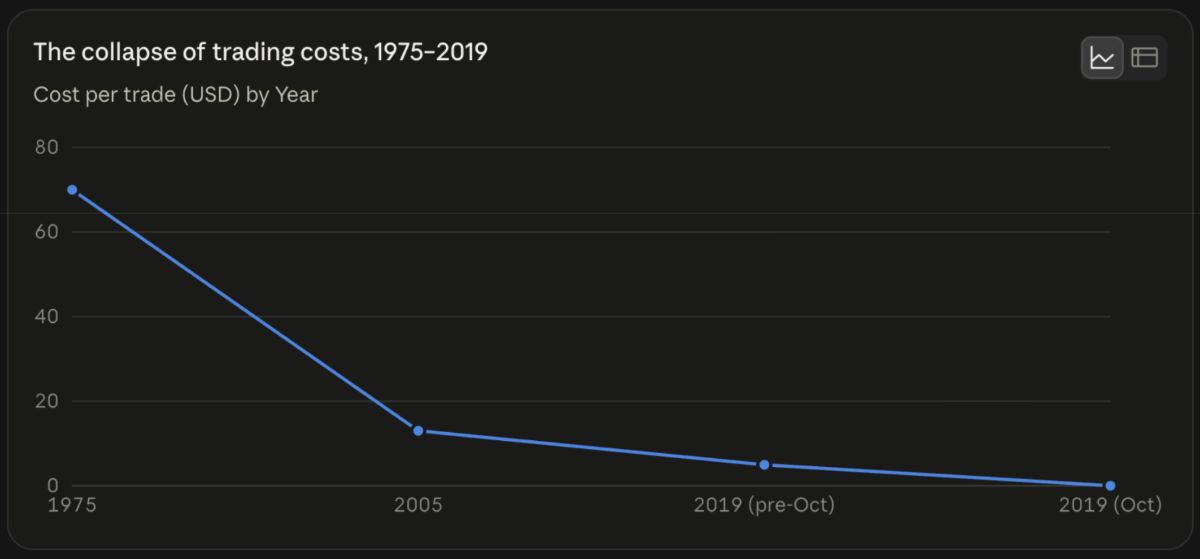
Once that price floor disappeared, the cost of buying and holding investments began a fifty-year collapse.
This is Schwab’s commission per trade, 1975–2019:
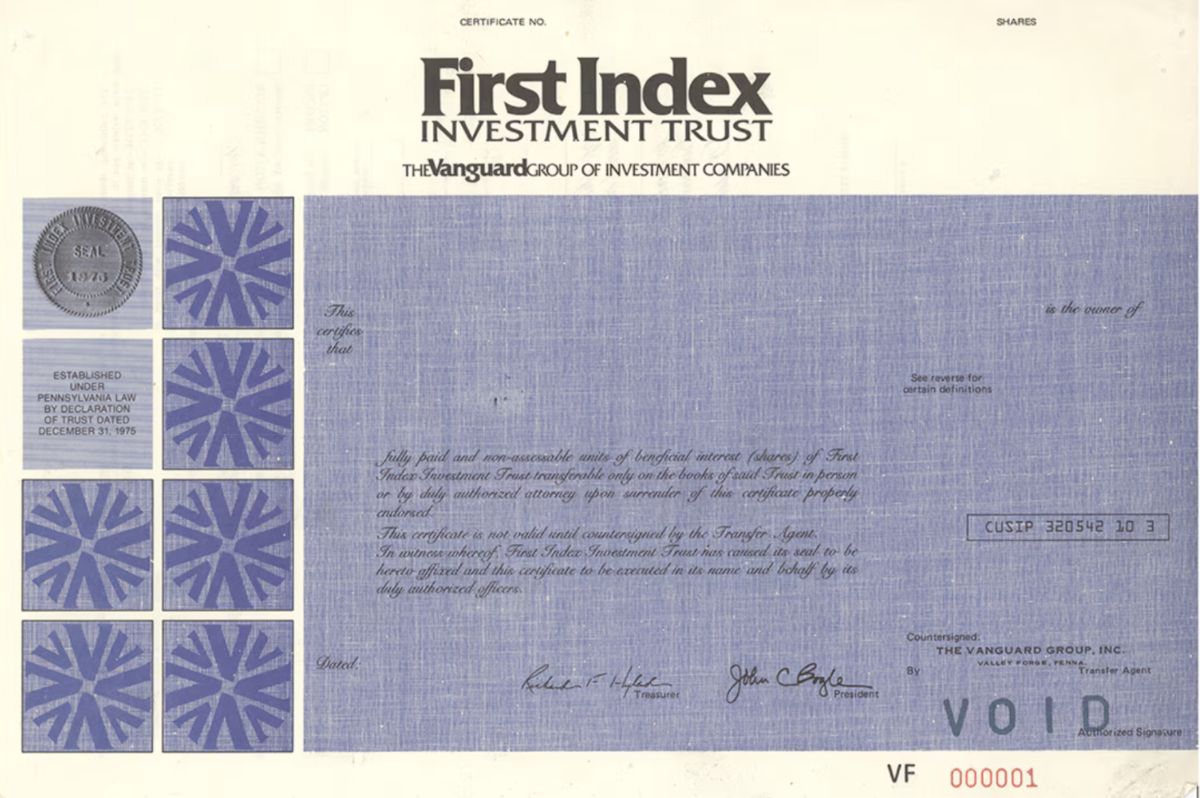
Then in 1976, Vanguard founder John Bogle launched the first index fund available to the public.
The idea was almost insulting to Wall Street at the time: don't try to beat the market, just buy all of it, cheaply, and hold on. Rivals mocked it as ‘un-American’ — a fund for people willing to settle for average. It’s since become the default way most people invest.
Then, in 1978, an almost accidental piece of tax law tied it all together. A benefit consultant working on a bank’s bonus scheme noticed an obscure new clause in the tax code — Section 401(k) — and realised it could let employees defer part of their salary into investments, tax-free, with an employer match on top.

Congress hadn’t planned on the 401(k) replacing pensions. But within a decade, it effectively had.
In 1989, about 32% of American households owned stock in some form.
By 2022, that figure had climbed to 58%.
Over the same rough window, the share of American workers covered by old-style pensions fell from 38% to 20%, while defined-contribution plans like the 401(k) rose from 8% to roughly a third of the workforce — and kept climbing.
Today, Americans hold more than $10 trillion inside 401(k) accounts alone, spread across about 70 million active participants.
None of them had to decide, in any meaningful sense, to become investors. It happened by default, buried in a payroll deduction most people never read closely.
It’s a similar story in Australia — you can step inside the $457-a-day superannuation machine here.
Owning a piece of American industry used to belong to a narrow class of people — those with the capital and the connections to buy in, from the twenty-four men under the Buttonwood tree in 1792 to the British bondholders who financed the railroads. For most of the country’s 250 years, that ownership was concentrated.
Money itself went through its own version of that same story. For nearly a century it was tied to gold, until Roosevelt severed that link in 1933, Bretton Woods rebuilt the world around it in 1944, and Nixon cut it loose entirely in 1971. By the mid-1970s, the dollar answered to nobody but trust.
That same decade, the machine started opening up. ERISA rewrote the rules on pensions. May Day made investing cheaper. Vanguard bet that ordinary people buying the whole market would beat experts trying to pick winners. And the 401(k) turned a payroll deduction into a stake in the market itself.
Stock ownership in America is still heavily skewed toward the wealthy and the old. Although this is changing — just ask the millions of millennials still living at home, dollar-cost-averaging into ETFs instead of saving for a house deposit. But it did something no earlier chapter in this series managed: it opened the machine to people who never asked to be let in.
Next week, the final instalment of this series: the biggest economy in the world, and the next 250 years of American Capital.
This week's quote:
'We are all inventors, each sailing out on a voyage of discovery, guided each by a private chart.'
— Ralph Waldo Emerson
Invest in knowledge,
Thom
The Benchmark
Read more: Part III: Panic, rescue, and ‘duck hunting’ precipitates the Fed.
Share: Forward this email to someone you know would appreciate it.
Connect: Add me on LinkedIn
Become a reader:Subscribe to The Benchmark.
Get the next issue
The Benchmark lands free in your inbox every Thursday.
On May 12, 1944, the US Eighth Air Force flew bombers into central Germany with an unusual target list.
On a cold Monday morning in January 2000, two investors sat down at their kitchen tables. They each had $100,000 to invest.
On September 8, a 27-year-old British researcher sat on a park bench in San Francisco’s Alamo Square and announced on X that he’d quit his job.