Refine, baby, refine
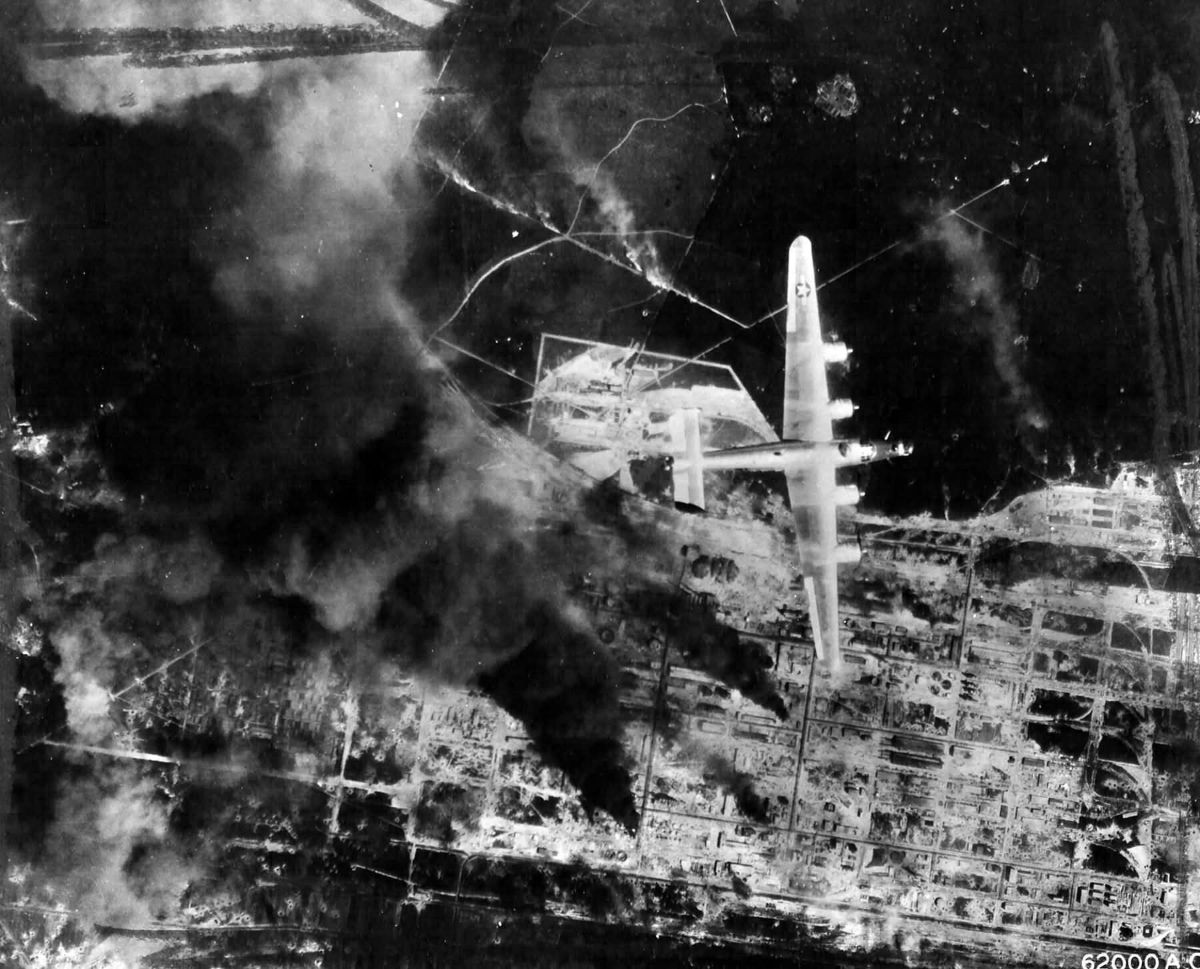
On May 12, 1944, the US Eighth Air Force flew bombers into central Germany with an unusual target list.
Welcome to the second edition of my American Capital series.
Last week, we covered how the US began as a bankrupt republic, quickly earned a reputation borrowing and repaying debt, and then promptly launched a bond market which blew up almost immediately.
This bond market collapse led to the Buttonwood Agreement — a secretive document signed by 24 stock brokers which quietly created the New York Stock Exchange.
For the 77 years following Buttonwood, the United States ran with no central bank.
For much of this period, the country had no single currency either.
What Americans carried in their pockets depended entirely on where they stood — and what they were holding might be worthless two towns over.
The First Bank of the United States — the national bank Alexander Hamilton had fought to create — lapsed in 1811 when Congress declined to renew its charter by a single vote.
For five years, the country had no national bank at all.
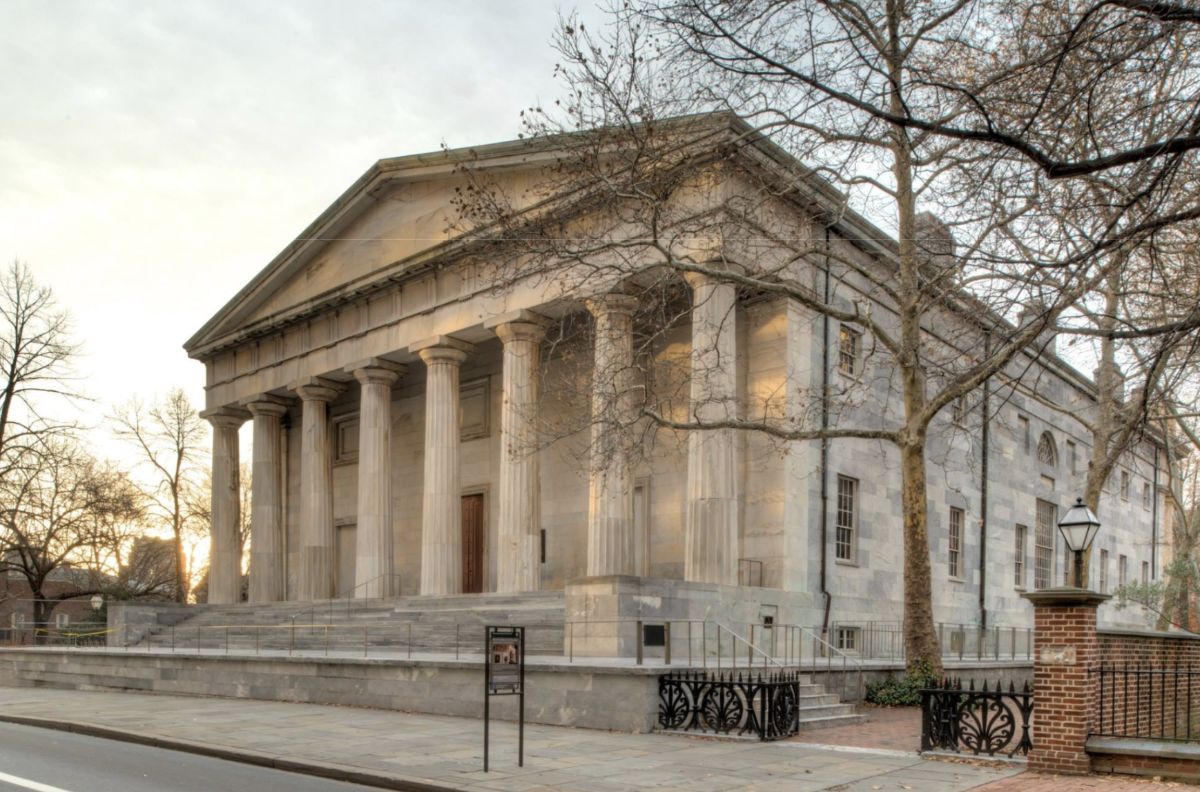
In 1816, Congress reversed course and chartered the Second Bank of the United States. It held federal deposits, issued a currency accepted across state lines, and had the power to rein in smaller banks that lent too recklessly.
But Andrew Jackson, elected president in 1828, hated it.
He saw the Second Bank as a private monopoly, run by wealthy easterners, answerable to its shareholders rather than to voters, and dangerous precisely because it could make or break ordinary state banks with a single lending decision.
He ran for re-election in 1832 partly on a promise to destroy it, and won.
That same year he vetoed a bill to renew the bank's charter. Congress couldn't override him. The charter expired in 1836, and this time nobody tried to renew it.
The United States now had no national bank, no institution to backstop other banks in a crisis, and no plan for what would replace either.
This remained the case for the next 77 years.
With no national bank and no national currency, individual states stepped into the vacuum.
Under so-called ‘free banking’ laws, adopted first by New York in 1838 and copied widely afterward, almost anyone could open a bank. Deposit a pile of state bonds as collateral, and you were licensed to print your own banknotes.
You'd buy state bonds the way anyone bought government debt at the time — from the state treasury directly, or on the secondary market from existing bondholders, using your own capital or capital you'd raised from investors. So a group of men wanting to start a bank would pool money, buy a stack of (say) Ohio or New York state bonds, then physically deposit those bond certificates with a state banking authority as collateral. In exchange, the state would authorize them to print banknotes up to some multiple of the bonds' value.
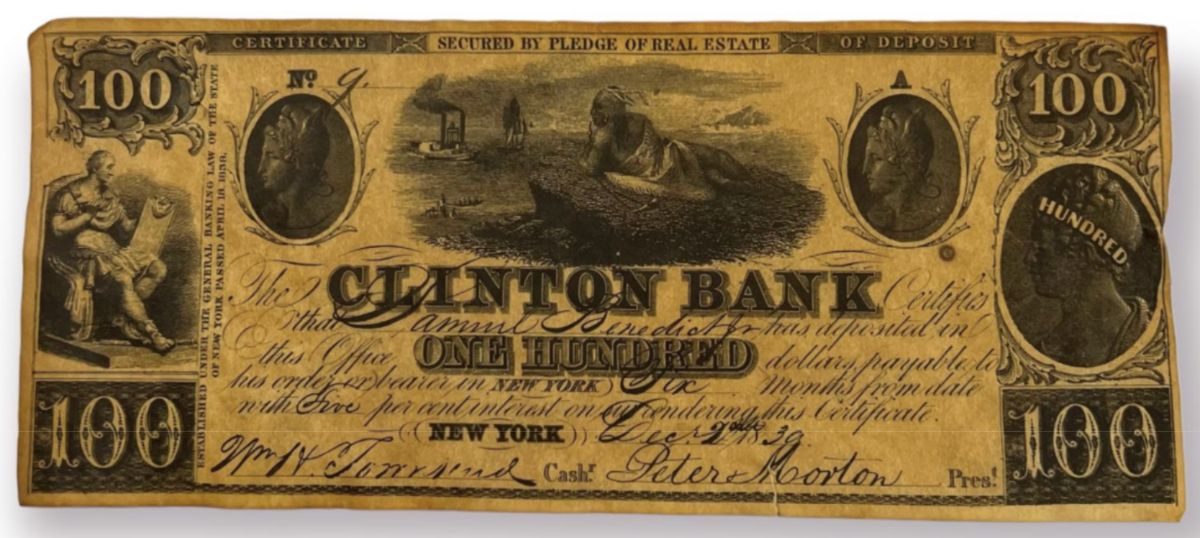
The mechanism was meant as a safeguard — if the bank failed, the state could seize and sell the bonds to make noteholders whole, at least in theory. In practice this is exactly where ‘wildcat’ schemes gamed the system: some operators used low-quality or thinly-traded state bonds whose real market value was far below what the state credited them for, so the ‘collateral’ backing the notes was weaker than it looked on paper.
By the 1860s, about 8,000 different kinds of banknotes were in circulation across the country — each one a private company's promise to pay, backed by whatever bonds that particular bank happened to hold.
So a dollar wasn't a dollar. A dollar was a bet on a specific bank's solvency, discounted by distance and reputation.
If a note came from a bank far from where you were, you had less way of knowing whether that bank was still solvent, and redeeming it for real value (specie, i.e. gold or silver coin) meant a costly trip back to the issuing bank.
The further the note had travelled from its issuing bank, the bigger the discount tended to be.
Merchants coped the same way currency traders cope with unstable currencies today: they consulted published guides — banknote reporters — that listed thousands of banks and told you what each one's paper was actually worth. A note from a solid Philadelphia bank might trade near its face value two streets away. The same note, presented in Cincinnati, might be worth 80 cents on the dollar, if anyone would take it at all.
Some stories tell that a handful of so-called ‘wildcat’ banks deliberately set up shop in remote, barely-accessible locations, in places wildcats supposedly outnumbered people.
The idea was simple: issue as many notes as possible into circulation in the cities, and make it as difficult and expensive as possible for any noteholder to actually travel out and redeem them for real value.
Distance was the fraud. By the time you found the bank, if you found it at all, it might already have failed — or never really existed to redeem anything in the first place.
Historians still argue about how common actual wildcat banks were versus how much the term became a catch-all slur for any bad free bank. Either way, the fact that the story took hold and stuck for 180 years tells you something about how little trust the system had earned.
With no lender of last resort, and a currency of variable and uncertain quality, the American financial system broke on a schedule.
There were different triggers each time — cotton prices, railroad overbuilding, a failed brokerage, a run on trust companies — but the same underlying mechanic.
A shock would hit confidence somewhere, noteholders rushed to redeem, banks with genuinely sound assets failed anyway because nobody could convert them to cash fast enough, and the panic spread faster than the truth about who was actually solvent.
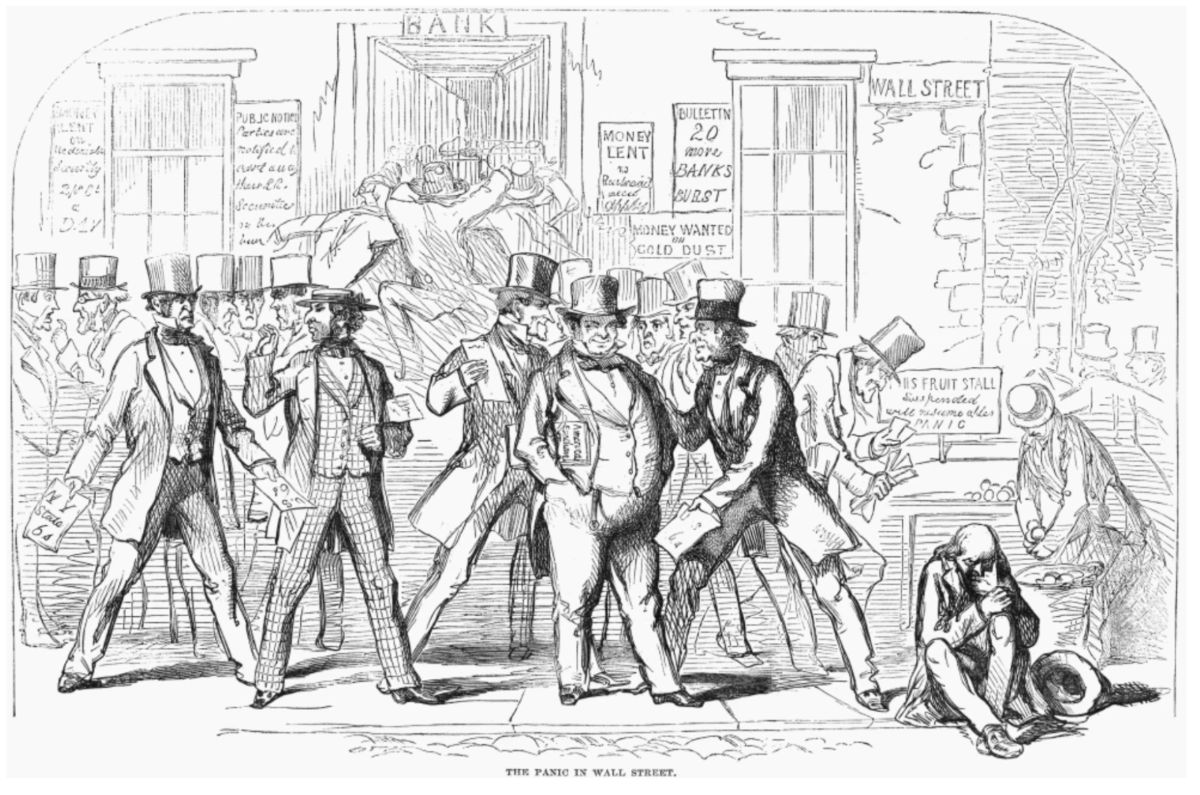
In 1857, for example, Ohio Life Insurance and Trust — a Cincinnati firm, not a major bank — collapsed after its New York manager embezzled its funds. Depositors nationwide, with no way to tell who else might be exposed, panicked and rushed every bank at once. Within weeks, 1,400+ banks and businesses suspended payments, and the shock even hit London.
Nobody at Ohio Life touched New York's banks. But the fear took hold regardless.
The Buttonwood Agreement had solved this problem for two dozen men who all knew each other's names. But nobody had solved it for a country of strangers.
And yet, in the middle of all this, America built the largest railroad network on earth.
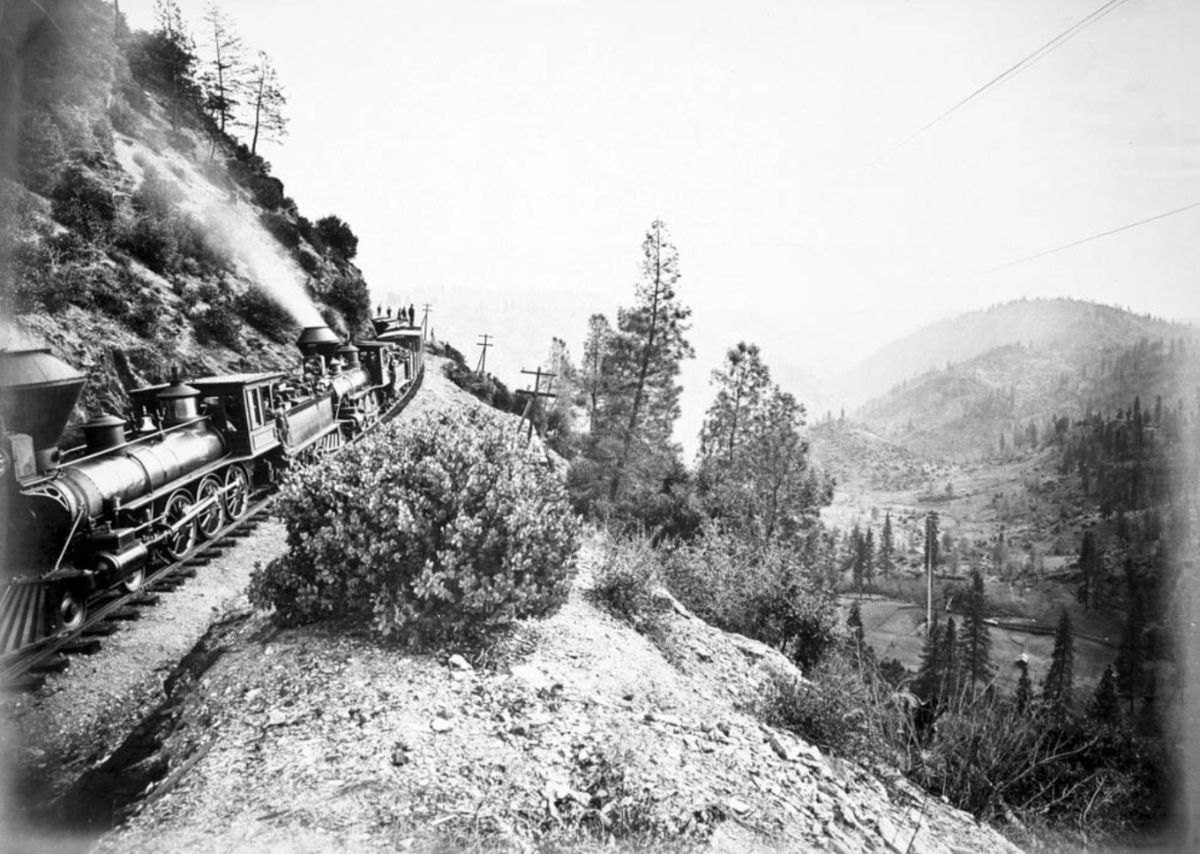
Between the 1830s and 1890, American railroad mileage went from a few hundred miles to more than 160,000 — a network larger than anywhere else on earth. It happened during the exact decades when American money was least trustworthy and the banking system least stable.
Some of that is coincidence of timing, some of it closer to cause and effect. The loose state chartering laws that let almost anyone open a bank also let almost anyone raise capital for almost anything, including railroads that had no realistic chance of ever turning a profit. Speculative capital was easy to raise because oversight was thin.
Money came chiefly from British investors, buying American railroad bonds on the promise of a continent being wired together. Britain, in effect, financed the physical backbone of a country whose currency it didn't trust and whose banks it had no way of vetting.
By 1894, more than 40,000 miles of track — a quarter of the entire network — were in the hands of bankruptcy receivers. Many investors didn't get their money back.
By 1863, the Union was two years into the Civil War and paying for it partly by printing its own paper money — ‘greenbacks’ — for the first time. That meant two currencies were now circulating at once: thousands of private state banknotes of wildly different quality, and this new federal paper. Washington needed people to trust and use the new money. Congress finally moved.
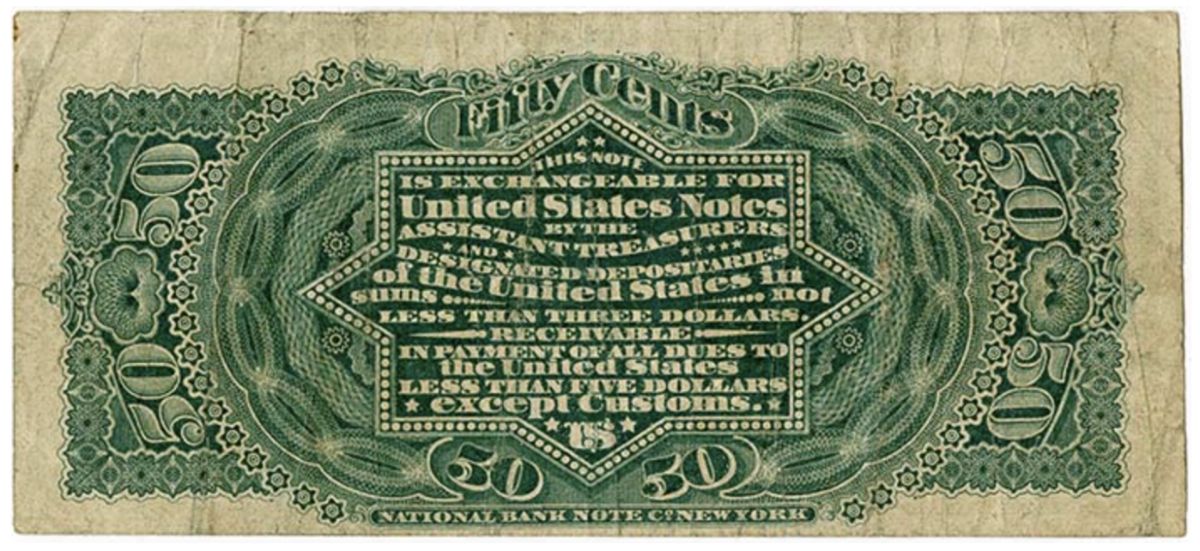
The National Banking Acts created a system of federally chartered banks empowered to issue a single, uniform national currency — and then, to make sure people actually used it, imposed a 10% tax on state banknotes that effectively taxed them out of existence.
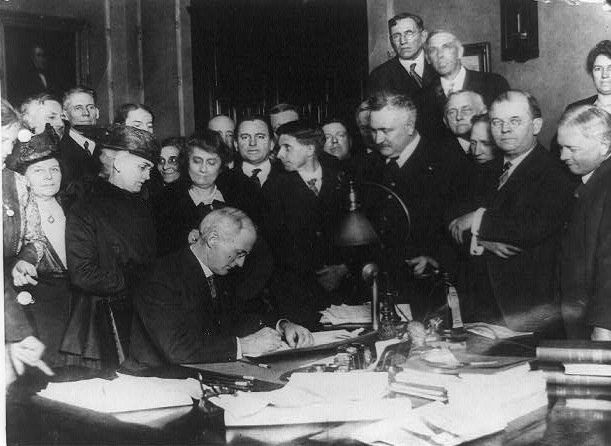
This wasn't a central bank, per se. There was still no institution to act as lender of last resort, no one to stop a panic once it started. That problem would take another 44 years, and one more catastrophic collapse, to solve.
But for the first time since Andrew Jackson killed the Second Bank, a dollar in one state was recognizably the same in another.
Next week: One man locks the country's bankers in his library, and the United States finally builds the institution it spent 77 years insisting it didn't need.
This week's quote:
"Money is a matter of belief, even confidence in the money-issuing authority."
— Adam Smith
Invest in knowledge,
Thom
The Benchmark
Read more: Part I: Debt, Panic, and a Buttonwood Tree on Wall Street.
Share: Forward this email to someone you know would appreciate it.
Connect: Add me on LinkedIn
Become a reader:Subscribe to The Benchmark.
Get the next issue
The Benchmark lands free in your inbox every Thursday.
On May 12, 1944, the US Eighth Air Force flew bombers into central Germany with an unusual target list.
On a cold Monday morning in January 2000, two investors sat down at their kitchen tables. They each had $100,000 to invest.
On September 8, a 27-year-old British researcher sat on a park bench in San Francisco’s Alamo Square and announced on X that he’d quit his job.