Refine, baby, refine
On May 12, 1944, the US Eighth Air Force flew bombers into central Germany with an unusual target list.
250 Years of American Capital
Last week I saw a large heavily tattooed man in his 60s handling a sheet of uncut US dollar bills worth $1 million.
No, I didn’t witness a bank robbery.
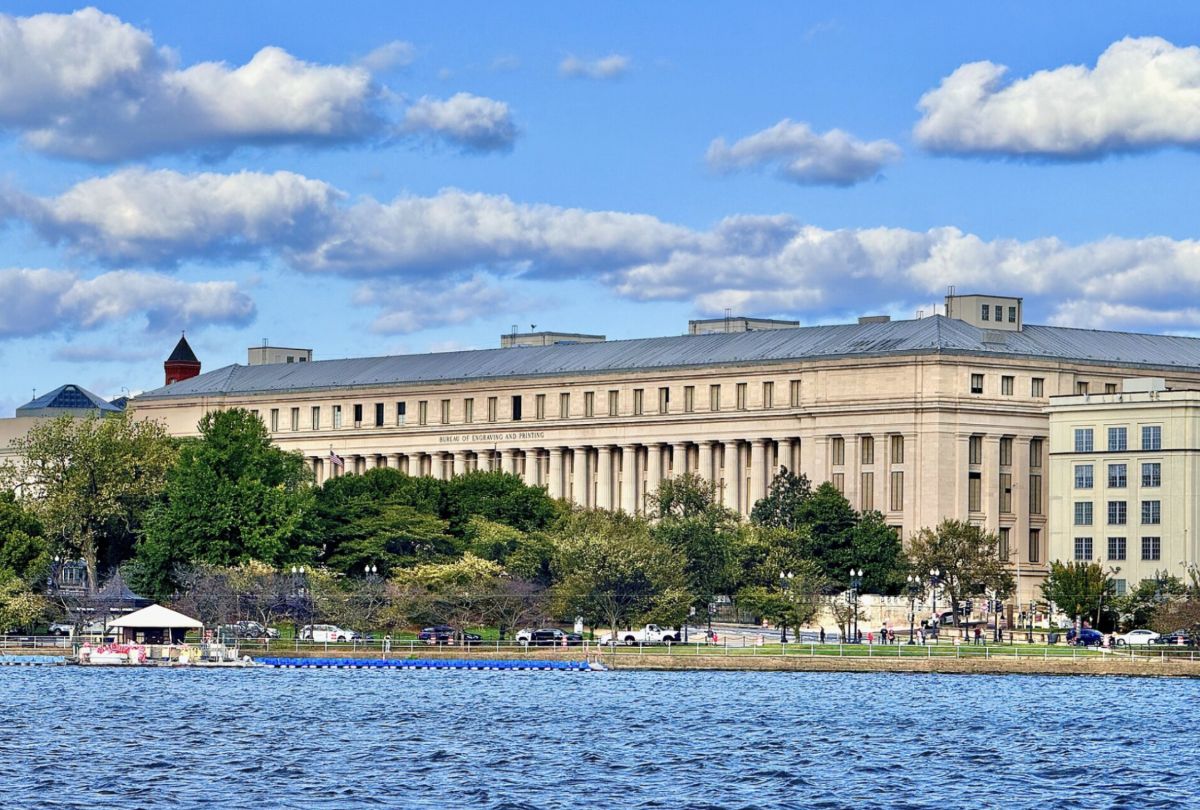
Rather, I took a tour of the Bureau of Engraving & Printing in Washington, D.C.
The tour is free, by the way (as in, taxpayer-funded — irony?).
Cheery, highly-trained, script-following tour guides take you through a series of walkways from which you look down on the machinery that prints much of the Federal Reserve’s $9 to $12 billion in fresh cash each month.
There are absolutely no photos. You can’t even remove your phone from your bag to check your messages. The BEP has its own police force to throw you out should you violate their visitation rules.
This is just one fascinating financial experience I’ve had while travelling here.
I’ve been in Tennessee, Alabama, Louisiana, D.C. and, now, New York — a decent cross-section of America, both geographically and economically.
Given my visit around the nation’s 250th anniversary, today I’m sharing the first in a series of Benchmark essays investigating 250 years of ‘American capital’.
Today you’ll learn about how the United States was founded on debt and financial crisis, and how those things spawned the New York Stock Exchange.
First, something small, but telling, which I’ve noticed since arriving:
Americans are not afraid to talk about money. Nor are they shy about sharing their financial ambitions.
In Germany, where I live, this is not a thing. No other country I’ve lived in or visited has this quality.
At a motor race in Tennessee, a young man with a chiller full of iced drinks on his shoulder stops to speak with me. He tells me how he travels around and beyond the state, selling his iced beverages at sports and entertainment events.
“I love to travel. I love making money. And I love talking to people.”
At a pancake house a few days later, the young waiter asks me how I am this morning, to which I respond and ask him the same.
“I’m tired, honestly. But mornings like these I just think of the money.”
Just this morning, a corruption investigator for Congress explains that while she’d love to live in London again, she knows the money is better here and she has better prospects for “getting ahead”.
There’s no arrogance or boasting. These people are just matter-of-fact and seemingly at peace with their place in the great American economic machine.
A quarter of a millennium since it began, let’s look at where that great machine started.
The romantic version of the 1776 Declaration of Independence skips the accounting.
The revolution was financed by printing money — the Continental Congress had no taxing power, so it issued paper and hoped.
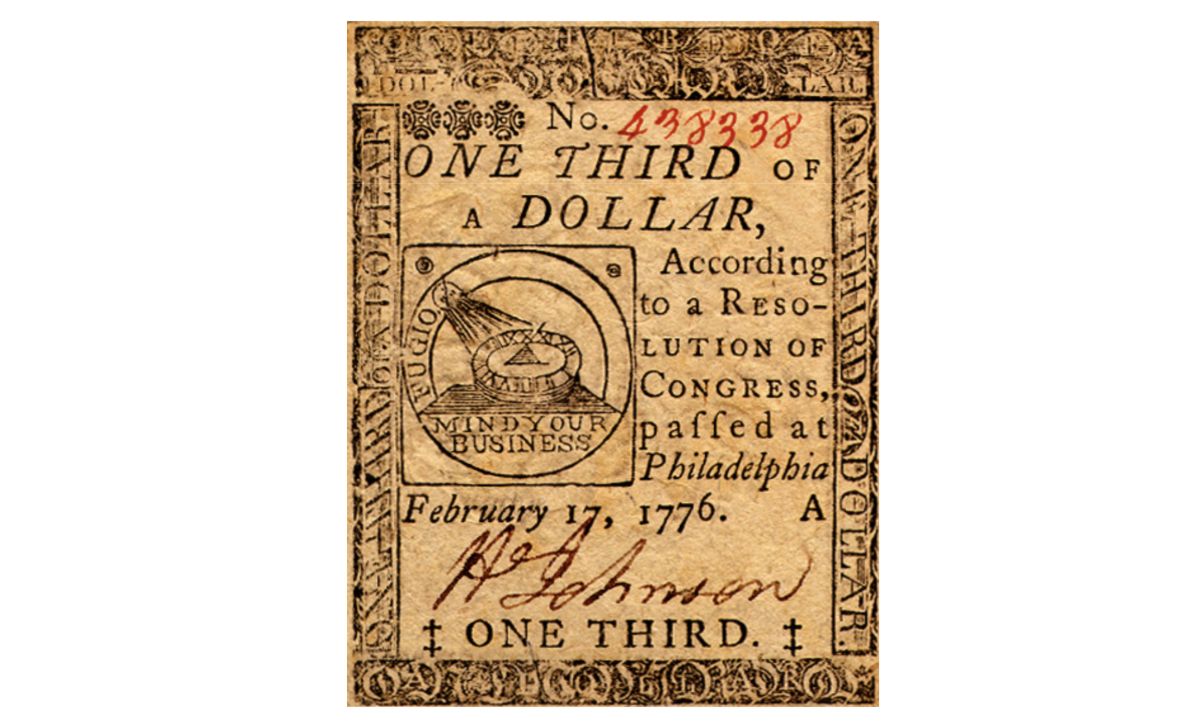
By the early 1780s that paper had inflated into worthlessness, and ‘not worth a Continental’ had entered the language as a way of calling something garbage.
By 1790 — just 14 years in — the new United States owed roughly $79 million it had no plausible way of paying.
About $54 million of it was federal, including around $12 million owed to foreign creditors — mainly French and Dutch lenders who had bankrolled the war. Another $25 million or so sat on the books of the individual states.
The country was, in the language we'd use today, a defaulted emerging market with no credit history and no central government worth the name.
Alexander Hamilton, thirty-five years old and the first Treasury Secretary, published his Report on Public Credit in January 1790.
He proposed that the federal government pay all its debts at full face value — including the state debts, which it wasn't liable for.
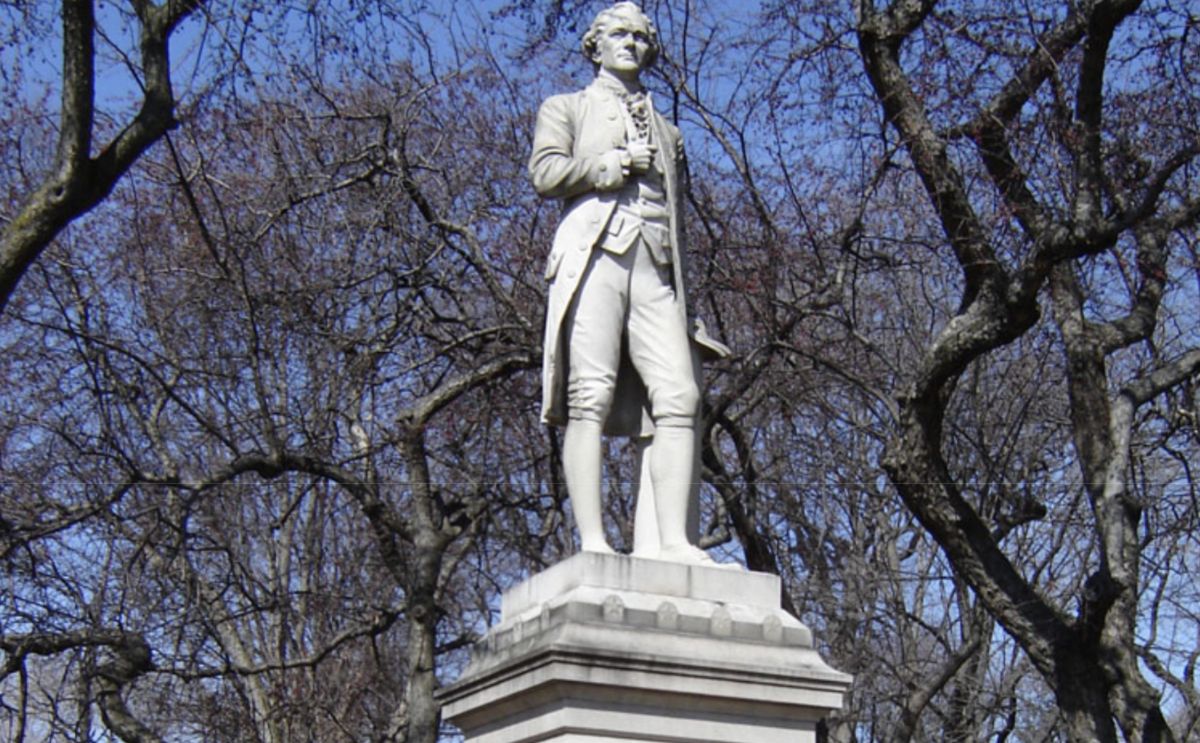
This was ferociously unpopular, for two reasons.
The first was fairness. Most of the original war bonds had long since been sold by the soldiers and farmers who received them, often for a fraction of face value, to speculators who'd bought on the chance of the federal government doing exactly what Hamilton proposed.
Paying at par meant enriching the speculators and doing nothing for the people who'd actually fought. Virginia congressman James Madison proposed splitting the payment. Hamilton refused.
The second was federalism. States like Virginia had already paid down their war debts and saw no reason to fund Massachusetts's. Assumption meant a transfer, and it meant a permanent, powerful national treasury — which was precisely what its opponents feared and precisely what Hamilton wanted.
The deadlock broke over dinner in June 1790, at Thomas Jefferson's table.
Hamilton got his assumption of the state debts. In exchange, the permanent national capital was moved south, to a site on the Potomac.
Washington, D.C., in other words, exists because of a debt deal.
Hamilton wasn't trying to clear the debt. He was trying to establish it.
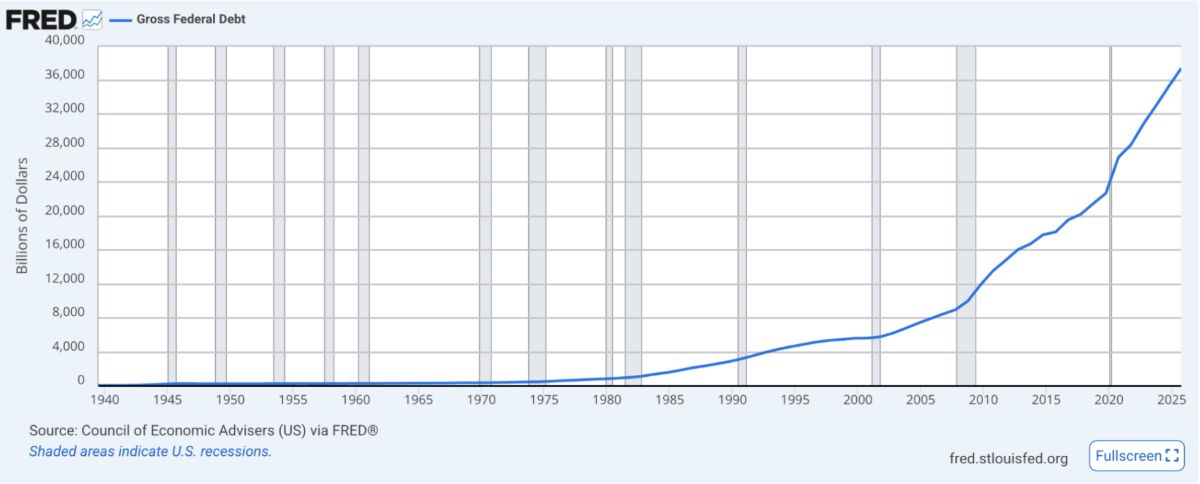
Pay creditors at face value, on time, without negotiation, and you produce something a new country cannot otherwise buy: a reputation.
Once the world believes you'll pay, you can borrow cheaply forever, and cheap borrowing is the difference between a colonial backwater and a continental project.
But there was a second effect. Paying the debt at par created a large class of wealthy people whose fortunes now depended on the federal government continuing to exist. Hamilton bound the moneyed interest to the union with a coupon.
Original debt holders (soldiers, farmers) had already sold their war IOUs cheap to speculators.
Hamilton's full-value payout went to whoever held the paper in 1790 — concentrating the windfall in a wealthier class, not the people who'd earned it. Some of these speculators, for instance, were members of Congress who bought up the discounted debt right before the vote.
In this way, American public credit was invented as a political instrument before it was a financial one.
The rest followed fast. The Bank of the United States was chartered in 1791. The dollar was legally defined by the Coinage Act of 1792.
Suddenly, there were things to trade: government bonds in several classes, and shares in the new bank.
Which means America had a securities market before it had political parties.
It took about four months to blow up.
A former Treasury official named William Duer began speculating on the new government paper with borrowed money — a great deal of borrowed money, some of it from tradesmen and shopkeepers, and some of it, awkwardly, drawn on his old department.
He was betting that bond and bank stock prices would keep rising — buying now with borrowed money, planning to sell later at a higher price and pocket the difference.
It was a classic leveraged bet gone wrong — much like the one that unwound last month for Leopold Aschenbrenner’s Situational Awareness hedge fund.
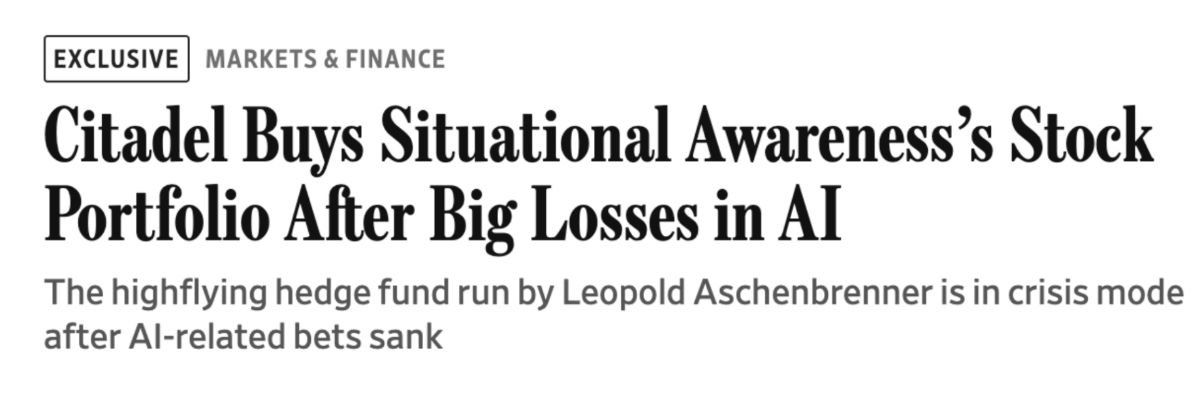
Prices ran, credit tightened, and in March 1792 Duer’s speculation came apart. He went to debtors' prison, where he eventually died.
Hamilton's response was, in effect, the first open market operation in American history: he used the government's ‘sinking fund’, established for slowly paying down debt, to instead buy securities and put a floor under the market.
A market collapse could have wiped out the still-fragile confidence in the new government's own securities, right after Hamilton had spent a year building that confidence from scratch.
Buying in to stop the fall was about protecting that reputation, not just the price.
It's the same instinct the Federal Reserve would formalize 121 years later, executed by a Treasury Secretary with no central bank to call on.
The Duer collapse revealed the problem of counterparty risk.
Trading happened at public auctions, in coffeehouses, wherever — anyone could call themselves a broker.
Nobody could tell who was solvent and who wasn't. Hamilton's intervention saved the prices. It didn't rebuild trust between traders.
So just two months later, traders closed ranks.
On 17 May 1792, twenty-four brokers signed a short agreement outside 68 Wall Street — under a buttonwood tree, which is what Americans then called a sycamore.
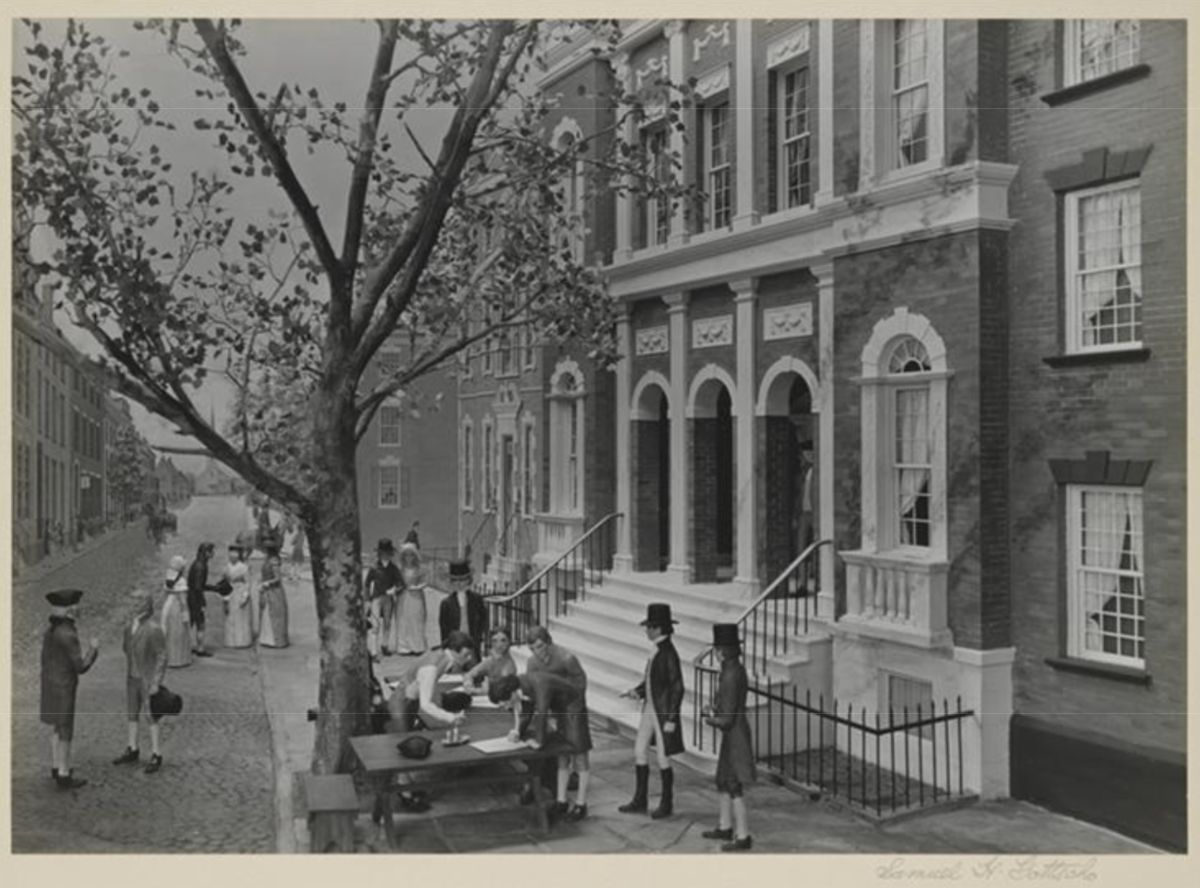
They agreed on two clauses. They'd trade preferentially with each other. And they'd charge a minimum commission of 0.25%.
They in effect created a cartel. This cartel would later be known as the New York Stock Exchange.
Trading only with each other wasn't a location rule. It was a vetting system. To be one of the twenty-four meant the other twenty-three had to trust your name on a deal.
Duer had just shown what happens when nobody can answer that question about a stranger. Buttonwood answered it by removing strangers from the market.
The fixed commission did the rest. Undercutting on price is how you win business from people who don't ask too many questions about who they're dealing with. Fix the price, and the only thing left to compete on is reputation.
Neither clause banned bad behaviour. They just made good behaviour the price of admission.
This closed, mutually vouching network of brokers had just watched a market eat itself — so they did something about it.
In next week’s instalment of 250 Years of American Capital: Thousands of private currencies. A panic every twenty years, like clockwork. And in the middle of all of it, America builds the largest rail network on earth.
This week's quote:
"A national debt, if it is not excessive, will be to us a national blessing."
— Alexander Hamilton
Invest in knowledge,
Thom
The Benchmark
Read more: 2025's winning trade is losing in 2026.
Share: Forward this email to someone you know would appreciate it.
Connect: Add me on LinkedIn
Become a reader:Subscribe to The Benchmark.
Get the next issue
The Benchmark lands free in your inbox every Thursday.
On May 12, 1944, the US Eighth Air Force flew bombers into central Germany with an unusual target list.
On a cold Monday morning in January 2000, two investors sat down at their kitchen tables. They each had $100,000 to invest.
On September 8, a 27-year-old British researcher sat on a park bench in San Francisco’s Alamo Square and announced on X that he’d quit his job.