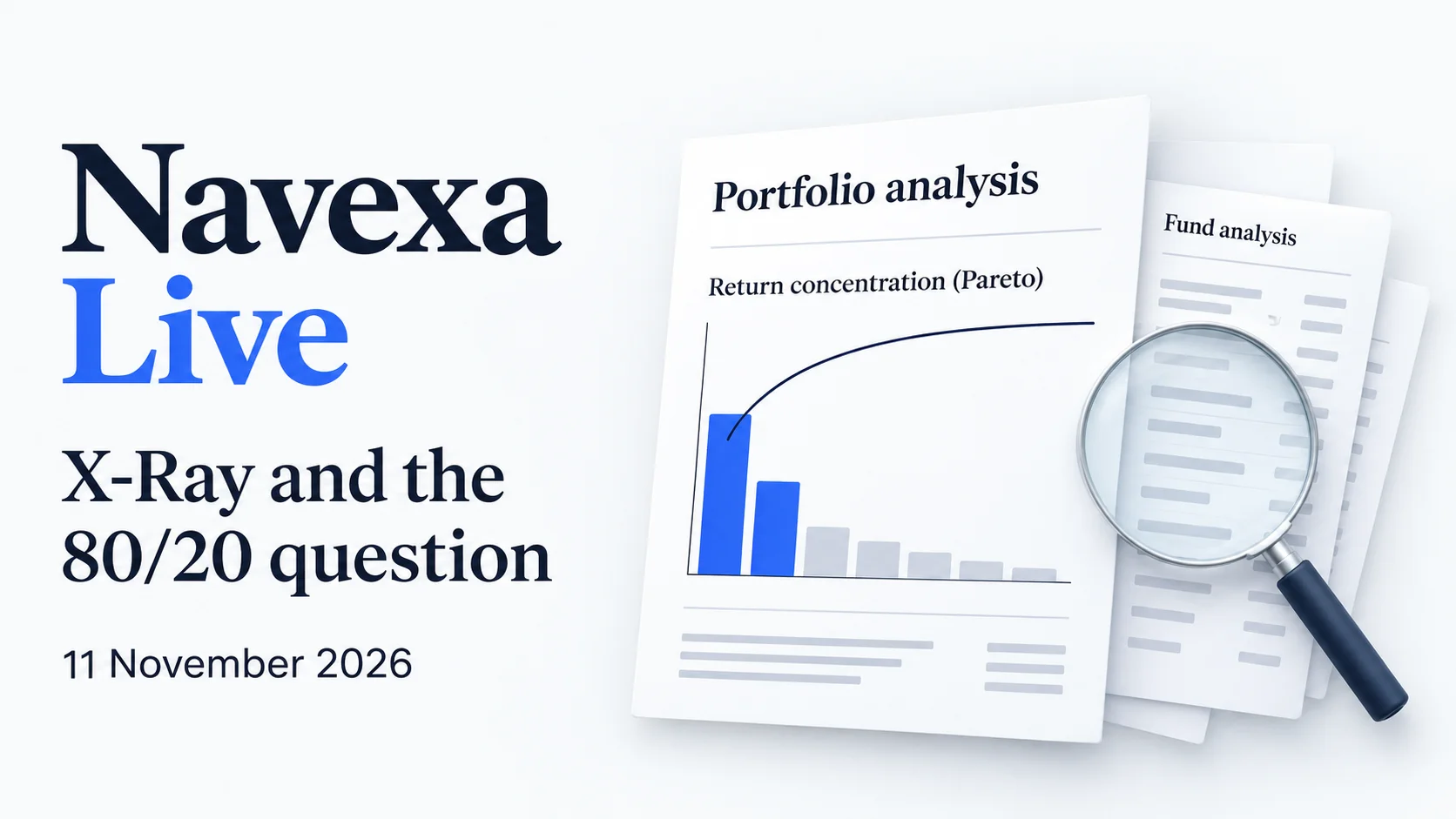
Four ETFs, more than 1,000 companies. How much was riding on five?
Four ETFs held more than 1,000 companies, yet five accounted for 19.4% of the money. Navarre Trousselot traces the overlap and shows you how to find your own top ten.
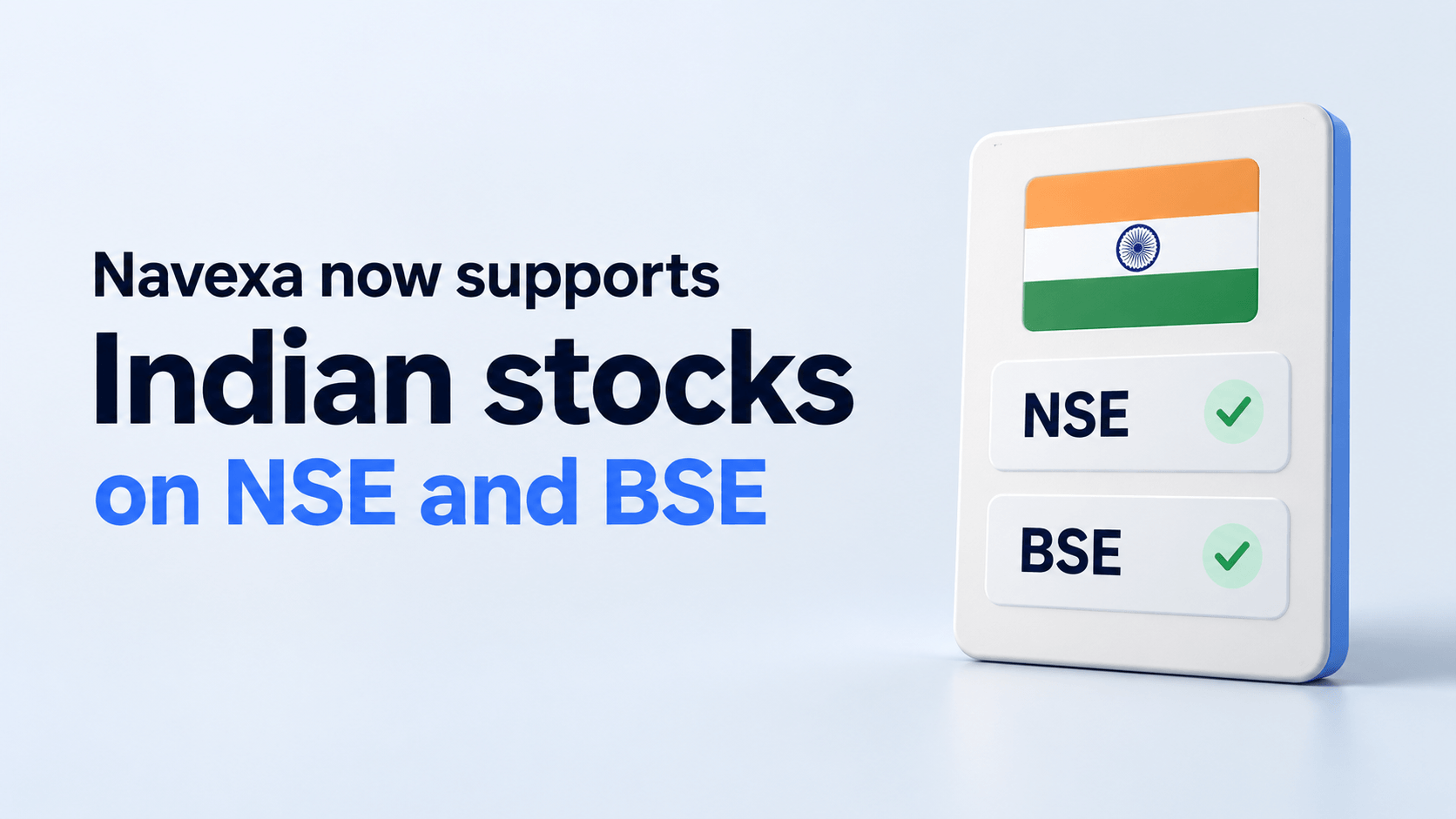
You can now track Indian stocks in Navexa, with support for the National Stock Exchange of India (NSE) and Bombay Stock Exchange (BSE).
Released on 5 October 2026, the update adds more than 2,600 NSE stocks and 5,300 BSE stocks to the platform. You can search for Indian shares and add them to your portfolio alongside investments from other supported markets.
If you hold shares in India as well as Australia, the US or the UK, you can now bring more of your investments into the same portfolio tracker.
Navexa now supports thousands of stock listings across both exchanges:
These are listings per exchange. Some companies, including Infosys, are listed on both NSE and BSE.
Supported Indian shares can now be added as listed holdings, with end-of-day market pricing. That means you can track them using market data rather than maintaining their prices manually as Custom Investments.
You can find the full list of supported regions in our markets and exchanges guide.
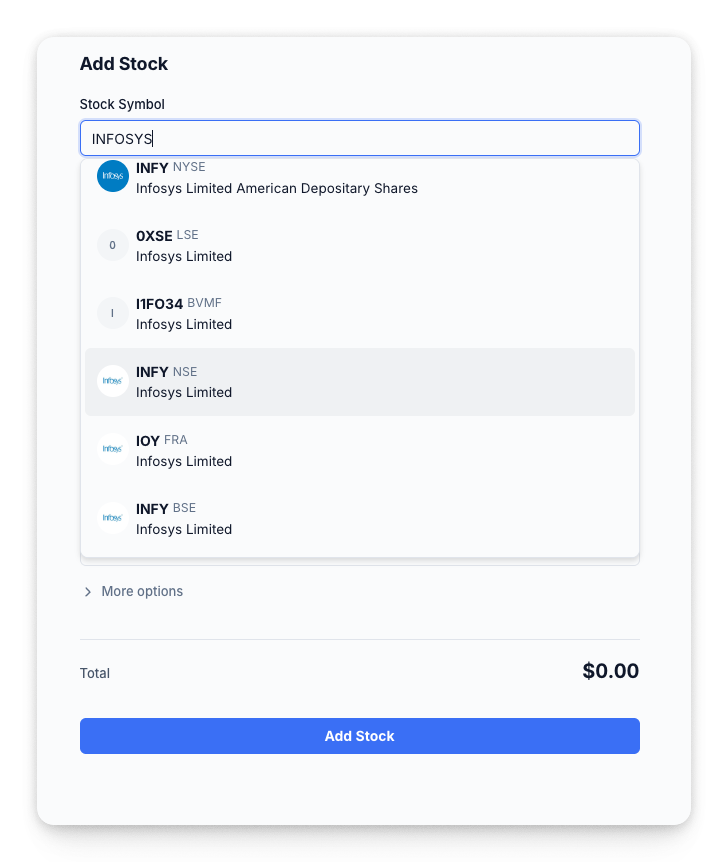
You can add an Indian stock through the same Add Stock screen you use for other listed shares:
For example, search for Infosys. You’ll see Infosys Limited listed as INFY NSE and INFY BSE.
Check the exchange label before choosing a result. Infosys also appears on other markets, including a US listing, so the label helps you select the Indian holding you want to track.
Adding NSE and BSE continues our work to help investors track portfolios that span several countries.
Back in 2020, we announced support for NYSE and Nasdaq, expanding Navexa’s coverage beyond Australian shares.
Today, Navexa’s supported markets include the ASX, NYSE, Nasdaq, London Stock Exchange, Toronto Stock Exchange and Hong Kong Stock Exchange, among others. Indian shares now join that coverage.
For investors with holdings across several markets, each addition makes it possible to keep more of their investment records together.
India’s share market has a history that stretches from trading under a tree to electronic exchanges and hundreds of new public listings. Here are five facts about the market you can now track in Navexa.
Before there was an exchange building, brokers gathered beneath a banyan tree outside Mumbai’s Town Hall. Those informal meetings laid the foundations for BSE, formally established in 1875 and recognised as Asia’s oldest stock exchange. Read SEBI’s account of BSE’s origins.

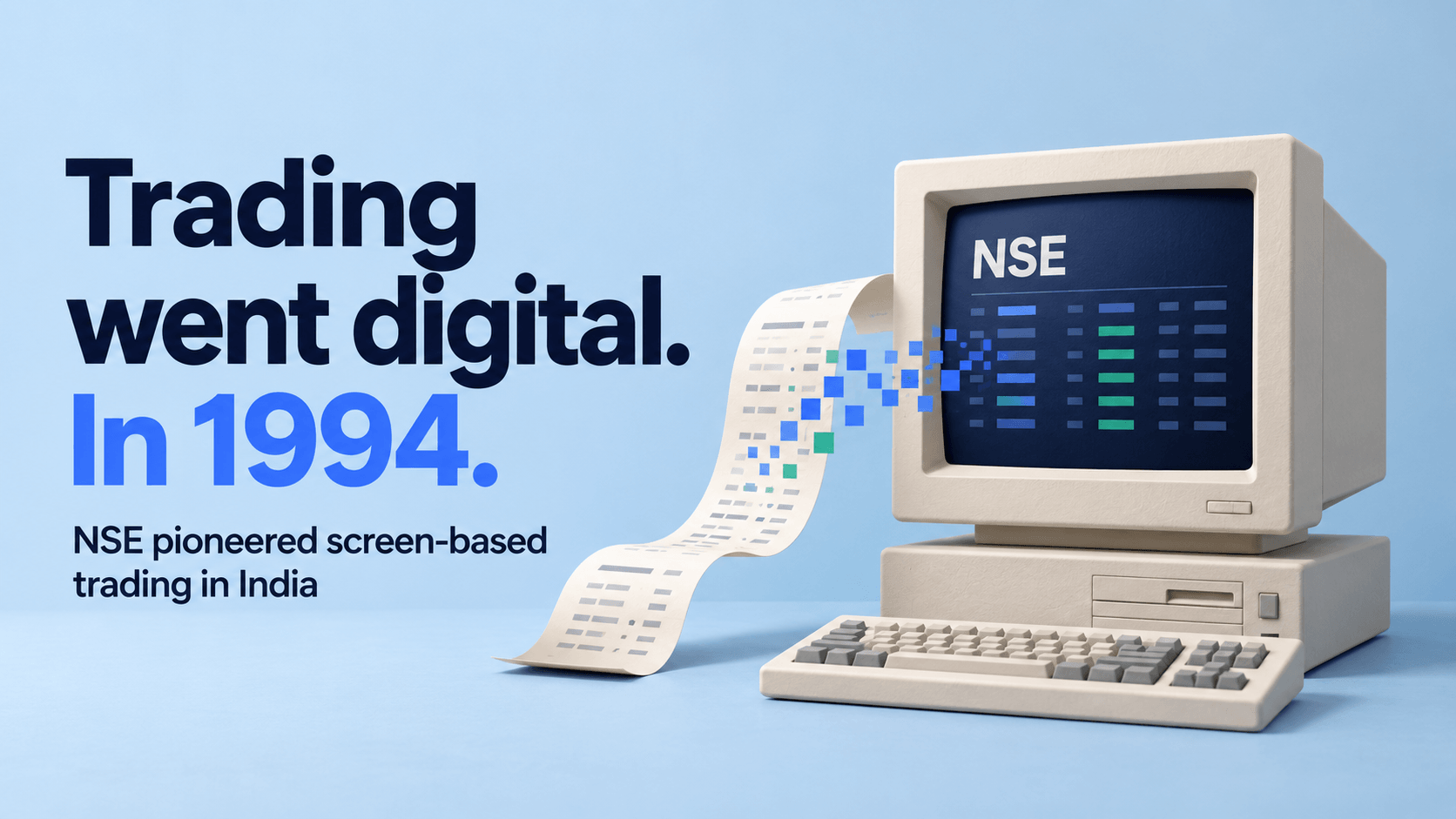
While BSE’s story stretches back to the nineteenth century, NSE helped modernise how Indian shares were traded. When it began operating in 1994, NSE became India’s first exchange to implement electronic, screen-based trading. The two exchanges bring together a long trading history and a more recent technological transformation. Explore NSE’s history.
India’s exchanges hold a special session called Muhurat trading during Diwali. Brokers and investors make symbolic trades to mark an auspicious start to the new business year. It is a distinctive meeting of financial markets and cultural tradition. Read BSE’s explanation of Muhurat trading.

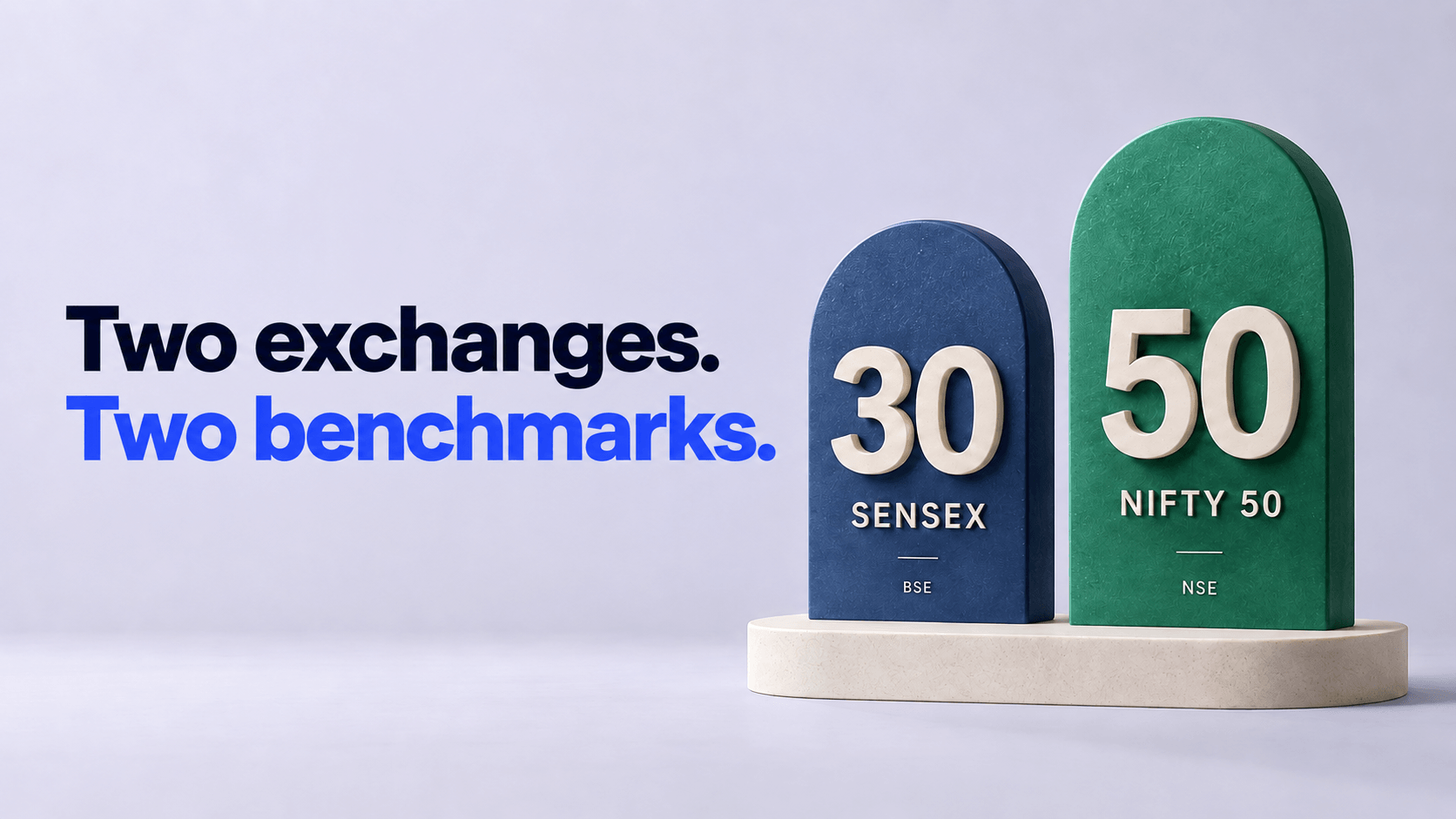
The Sensex tracks 30 major companies listed on BSE, while the Nifty 50 tracks 50 stocks listed on NSE. They are two widely followed benchmarks for the Indian share market, rather than a complete list of stocks on either exchange. Learn about the Sensex and Nifty 50.
India recorded 367 initial public offerings (IPOs) in 2025, accounting for 28.4% of global IPO activity by number. That put it first worldwide for the number of IPOs and third for the amount of money raised, according to NSE’s January 2026 report citing EY’s global IPO research. Read NSE’s IPO overview.

Indian market support was something our community asked for. We’ve now marked the NSE and BSE coverage request as Completed and added an update explaining how to find Indian stocks.
If there’s another market, asset or feature you’d like to see in Navexa, visit our feedback website. Search for an existing request, add your vote or share a new suggestion.
To see what has shipped, browse the Navexa changelog. You can also read the NSE and BSE release update.
Yes. Navexa supports Indian stocks listed on the National Stock Exchange of India and Bombay Stock Exchange. Search results identify the exchange with an NSE or BSE label.
Yes. You can add supported Indian shares to a Navexa portfolio alongside holdings from other supported markets, including the ASX, NYSE and Nasdaq.
NSE and BSE holdings use end-of-day pricing in Navexa. Prices update after the market closes.
Open Add Stock and search for Infosys or INFY. Select Infosys Limited with the NSE or BSE label to match your Indian listing.
Ready to add your Indian shares? Open Navexa and start with one holding.
Track your portfolio in Navexa
Free 14-day trial. No credit card required.
Try Navexa Free →Four ETFs held more than 1,000 companies, yet five accounted for 19.4% of the money. Navarre Trousselot traces the overlap and shows you how to find your own top ten.
Watch the 18 November replay for custom price imports, an AMMA statement in Roi, a Pareto chart, and benchmark analysis in Claude. Get the slides and prompts.
Watch the 11 November Navexa Live replay: Portfolio X-Ray, Roi prompts, the updated app and James’s 80/20 portfolio example, with slides and audience questions.