What 40 Years of ASX Surveys Reveal About Australian Investors in a Crash
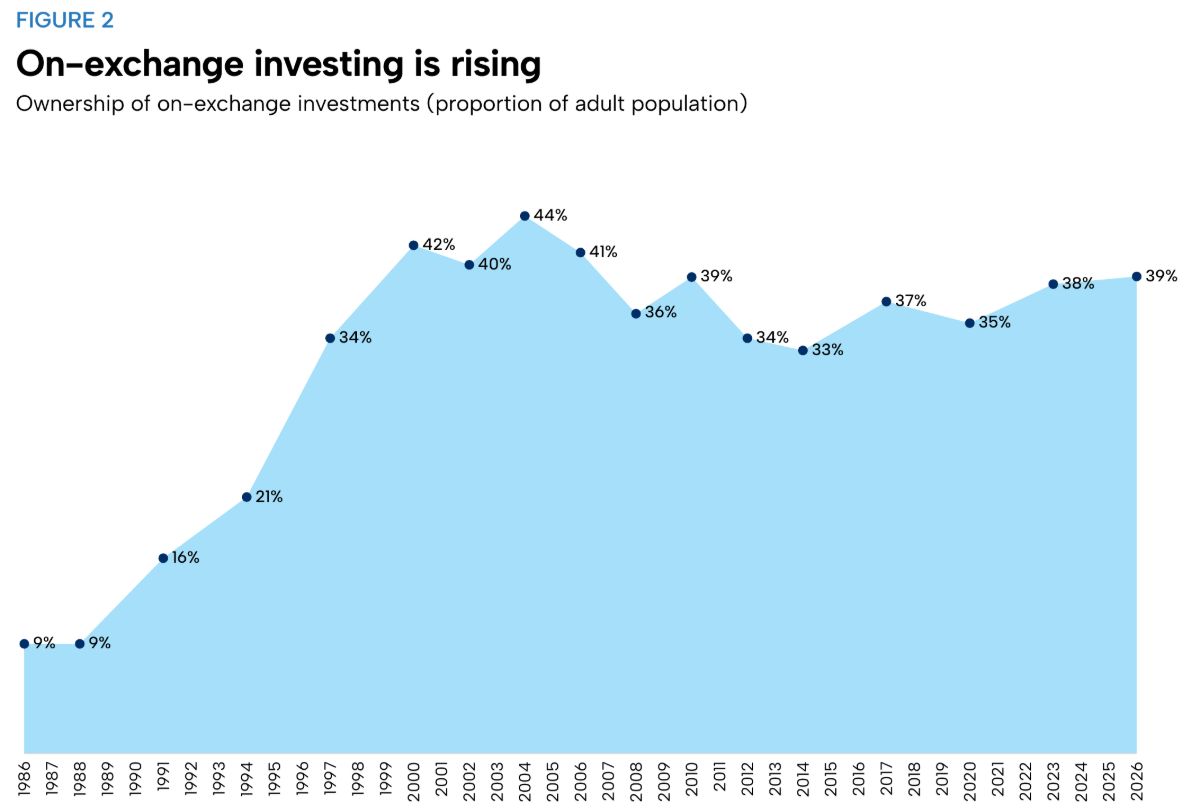
In 1986, Australia's stock exchanges ran the first edition of a survey called the Australian Share Ownership Study. It found that about a million Australians…

Dear Reader,
Warren Buffett is the undisputed King of Investing in the modern age.
But he didn’t win his crown without facing his challengers.
Buffett’s now-legendary 19.8% annualized return was, for more than a decade, beaten fair and square by a lesser-known benchmark-beating legend.
Peter Lynch is the investor, mutual fund manager, author, and the man who took Fidelity Investment’s Magellan Fund on a 13-year rampage between 1977 and 1990 to beat the benchmark S&P 500 by more than 2X every year.

Peter Peter Benchmark Beater (source)
A ‘ten bagger’ is a 10X return on an investment.
It turns a $10,000 investment into $100,000.
Peter Lynch invented the phrase, because he needed something to describe what kept happening to the stocks he bought during his time running the Magellan fund.
All told, Lynch invested in more than 100 ten baggers including:
He even bagged a 900%+ gain on, of all things, Dunkin’ Donuts.
Let me just repeat the fact:
Peter Lynch successfully invested in more than 100 stocks that went up 10X or more.
That’s not luck. That’s strategy.
And it’s this supreme strategic approach that drove the Magellan Fund up 29.2% for 13 years straight.

S&P 500 = obliterated (source)
In 1977, Peter Lynch assumed leadership of the then little-known Magellan Fund, which managed a modest $18 million in assets.
By the time Lynch stepped down as the fund manager in 1990, the fund had skyrocketed to more than $14 billion in assets, encompassing more than 1,000 individual stock positions.
This remarkable growth can be attributed to Lynch’s unique approach to investing. Operating with minimal restrictions — except for regulatory limits, such as not being able to hold more than 5% of his total portfolio assets in a single company at the time of purchase — Lynch was free to explore a wide array of investment opportunities.
Which meant he was pretty free to focus on individual stocks.
He initially targeted large US companies but progressively shifted his attention to smaller and international stocks, thereby diversifying the fund’s portfolio and enhancing its growth potential.
And grow it did.
Between 1977 and 1990, Lynch’s Magellan Fund boasted an average annual return of 29.2%, securing its place in history as the mutual fund with the best 20-year return as of 2003.
One thousand dollars invested the day Peter Lynch took over the fund, and sold the day he quit, would have turned into $28,000 — a 2,700% total return.
So, how exactly did he pick the 10 baggers that propelled the fund to such insane returns?
Peter Lynch was renowned for his ‘story’ investing approach.
He anchored many of his stock picks in a well-founded expectation of the company’s growth prospects.
These expectations stemmed from the company’s ‘story’ — a clear narrative about what the company planned to do or what events were anticipated to drive its success.
Lynch emphasized that familiarity and a deep understanding of a company’s business and competitive environment significantly enhanced the likelihood of identifying a compelling ‘story’ that would materialize.
As he famously put it, he preferred investing in ‘pantyhose rather than communications satellites,’ and ‘motel chains rather than fiber optics’.
As mentioned, Lynch picked more than 100 ten baggers — many of them ‘story stocks’.
But, a story was far from the only criteria he used on Magellan’s 13-year, 29.2% p.a., run.

Lynch’s One Up On Wall Street (source)
The following are just some of the tenets Peter Lynch used to turn $1,000 invested into his Magellan fund into $28,000 in little more than a decade.
‘Actually, Wall Street thinks just as the Greeks did. The early Greeks used to sit around for days and debate how many teeth a horse has. They thought they could figure it out by just sitting there, instead of checking the horse.‘
— Peter Lynch, in One Up On Wall Street
That’s it for this week’s The Benchmark email.
Forward this to anyone you know who needs to read it.
And, if one of our awesome subscribers has forwarded it to you…
Subscribe here for weekly emails with ideas, stories and content about long-term, high-performance investing!
Invest in knowledge,
Thom
Editor, The Benchmark
Get the next issue
The Benchmark lands free in your inbox every Thursday.
In 1986, Australia's stock exchanges ran the first edition of a survey called the Australian Share Ownership Study. It found that about a million Australians…
On October 7, China's central bank published one of the dullest documents in finance: its monthly reserve statement.
The ticket inspector flashed his identification. I opened the app containing my valid ticket, only to find that my valid ticket had not transferred over to my…