
250 Years of American Capital
Part V: Risk, failure, venture and gain
Welcome to the fifth and final edition of this American Capital series.
We started with a bankrupt republic that built a reputation for paying its debts, and a quiet agreement under a Wall Street tree that produced the New York Stock Exchange.
Seventy-seven years of financial chaos and panics followed, until one catastrophic collapse in 1907 forced Congress to build the Federal Reserve.
The dollar’s own promise — first tied to gold, then cut loose entirely by 1971 — turned out to be a separate fight, one that ended with money backed by nothing but trust.
And in the decade that followed, a quiet shift in tax and pension law turned millions of ordinary Americans into shareholders, often without them ever deciding to be.
By the late twentieth century, the country had built almost everything this series has tracked: a currency people trusted, a market people could cheaply buy into, and a legal system that let almost anyone own a piece of it.
One thing was still missing. Someone still had to fund the things that didn’t yet exist.
The Father of Venture Capital
In 1946, a Harvard Business School professor, Paris-born Georges Doriot, did something no one had really done before.

He raised money — from insurers, university endowments, investment trusts — and used it to buy small stakes in brand-new companies, most of them founded by engineers and scientists with no track record and no collateral.
His firm, American Research and Development Corporation, was remarkable for two reasons.
First, Doriot built it on a simple, almost heretical premise: back the person, not the balance sheet.
Second, he raised money from institutional investors rather than from wealthy families — who were accustomed to lending money and expecting it returned, plus interest, from a business that already existed.
Doriot proposed something structurally different — investing in many ventures that might fail, on the understanding that one success could cover every failure many times over.
In 1957, ARDC invested $70,000 in a small company called Digital Equipment Corporation — a fledgling computer business.

By 1971, that stake was worth $355 million — a return of more than 500x.
That single bet didn't just make ARDC’s returns.
It created the blueprint for the venture capital industry, from which every firm on California’s Sand Hill Road (think a16z, Sequoia and the like) still runs on today: fund a portfolio of long shots, expect most of them to lose, and let the rare enormous winners pay for all of it.
A new map for risk taking
Most financial systems are built to punish failure.
A defaulted loan, a bankrupt company, a bad bet — in much of the world, these carry lasting stigma, and sometimes legal consequences. In parts of Europe, a failed founder can spend years locked out of credit, or barred from directing another company at all. The message, structurally, is: don't try unless you’re already sure.
Venture capital runs on the opposite assumption: that failure is simply the cost of finding the very few ideas worth funding, and that the person whose last company collapsed might be exactly the person worth backing for their next one.
Doriot didn’t just tolerate failure. He built a model that required it. If every company in the portfolio succeeded, it meant nobody had taken a real risk in the first place.
That’s the same instinct this series has been tracking since Hamilton bet that the bankrupt country’s word was worth something…
Since a Brooklyn speculator’s collapse forced Wall Street to reinvent trust…
And since America kept building railroads through decades of currency chaos, funded by relentless foreign investment.
The failure factory
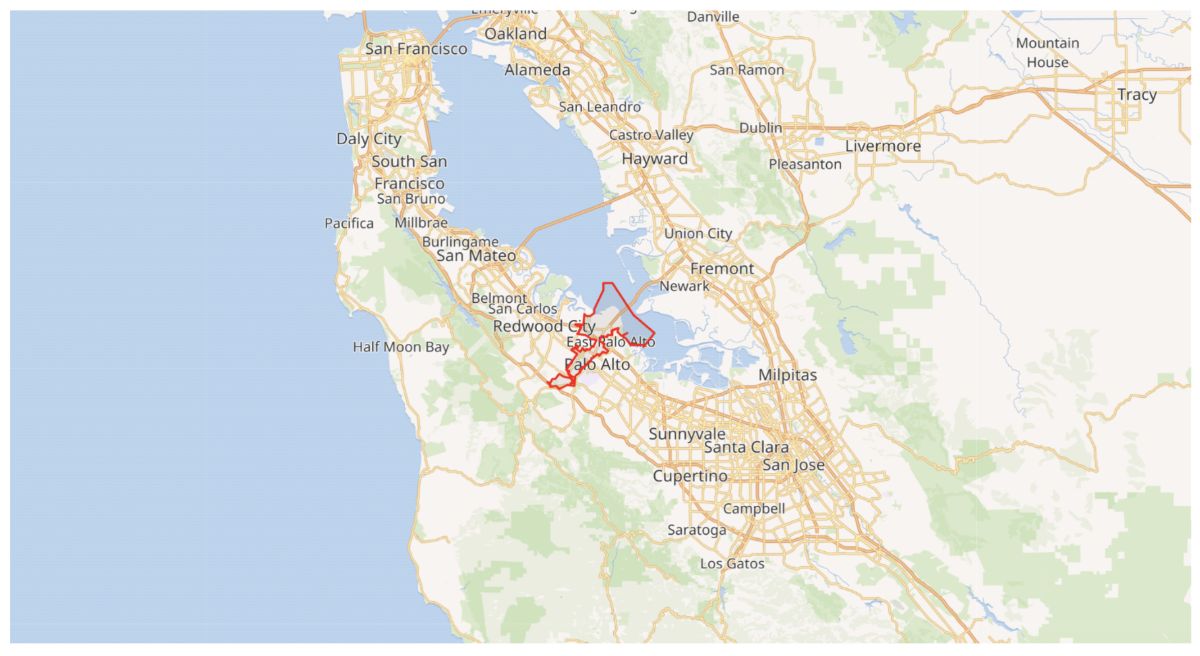
By the 1970s and ‘80s, Doriot’s model had migrated west, concentrated in a handful of firms on a single road in Menlo Park, California. The pattern held: back founders early, expect most to fail, let an Apple or Google cover the rest.
It became, over the following decades, the primary financing engine for nearly every major technology company to emerge from the United States — and largely nowhere else.
Not Europe, with its far deeper aversion to personal financial risk.
Not Japan, where lifetime employment at an established firm long outranked the uncertainty of a startup.
Not other wealthy, well-educated economies with plenty of capital sitting idle.
This wasn’t because other countries lacked engineers or ideas. It was because almost nowhere else had built a financial culture willing to fund a hundred potential failures to find the one unicorn among them — and willing to call the ninety-nine failures a reasonable cost of doing business, rather than a verdict on the people who tried.
The market eating the world
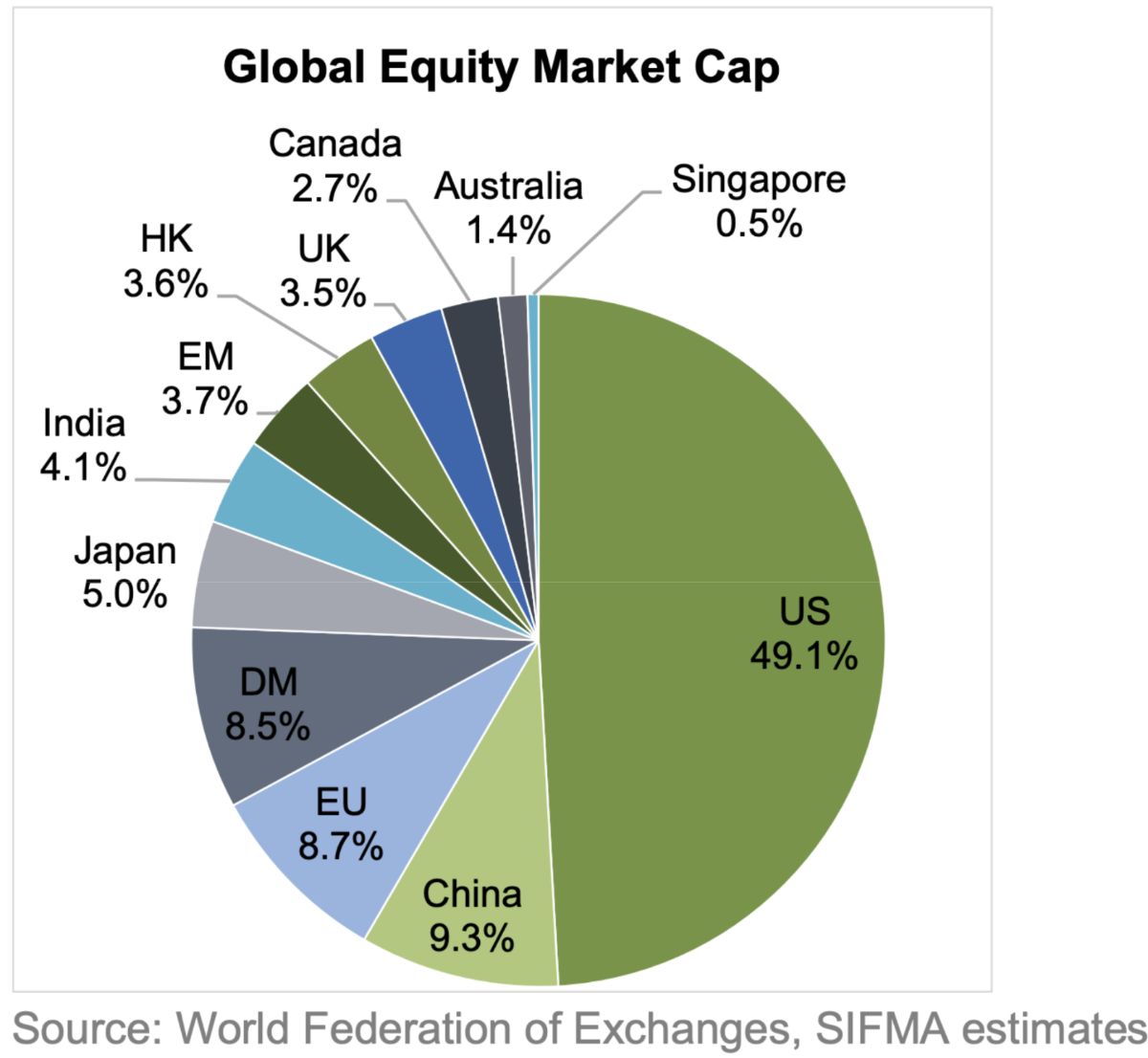
Today, the United States stock market is worth roughly $75 trillion — very nearly half of the entire value of every listed company on earth.
The dollar still dominates the world’s reserves, at just over 57%, though that figure has slid from more than 70% at the turn of the millennium.
It remains, by a wide margin, the most trusted paper promise in the global economy — a currency with nothing backing it but confidence, exactly as it’s been since 1971, still the one nearly everyone chooses anyway.
And the venture model that started with Doriot's $70,000 now underwrites some of the largest private valuations in history. OpenAI, Anthropic, xAI and Databricks alone are worth a combined figure not far off the GDP of France — the world's seventh-largest economy — and none of them are public companies yet.
None of this comes free, of course. The US government’s own debt, held by the public, now sits close to 99% of GDP, and current projections put it past 120% within a decade.
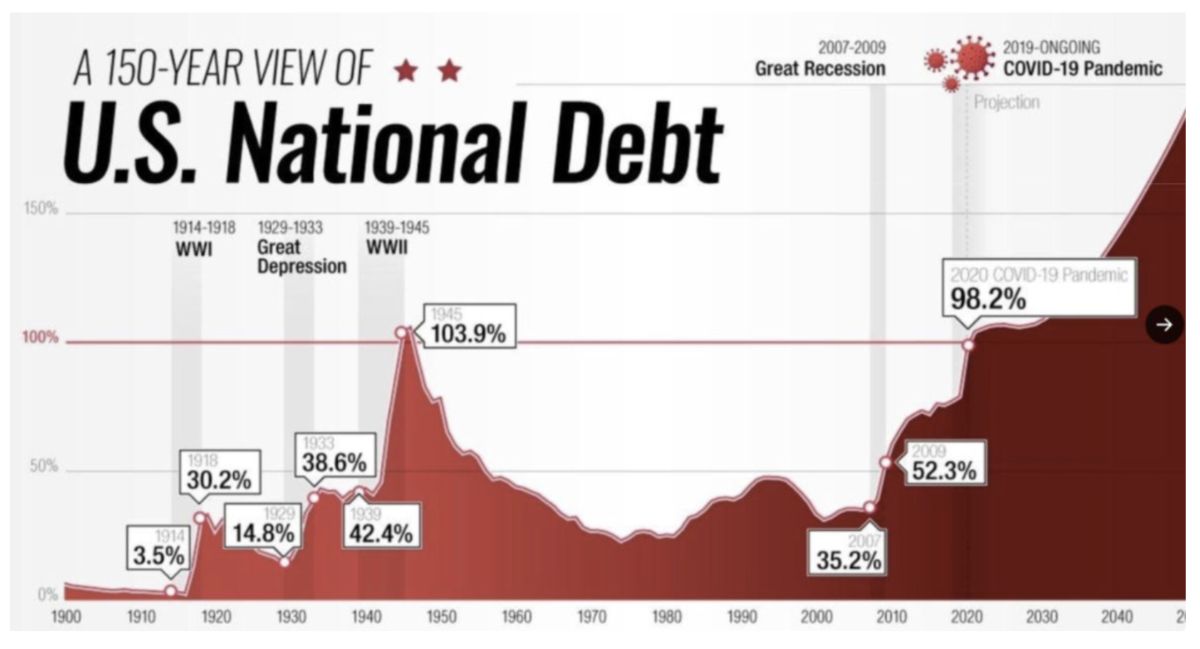
The same country that built the most trusted currency and the deepest capital markets on earth is also, by its own numbers, spending well beyond what it collects and plumbing new depths of debt.
Just doing it
From a bankrupt republic to a trillion-dollar IPO pipeline, it’s really just been one move, repeated: give up certainty for a shot at something better.
A country with no credit bet that its word was worth something anyway. A private banker’s library became a public institution. A currency backed by gold became a currency backed by trust and belief. A pension promise became a stake in the world’s biggest stock market. A professor’s $70,000 bet became the model that now decides which companies flourish from the masses of failures that pave the way.
It’s worked for 250 years. There is, of course, no guarantee it works for the next 250.
The dollar’s grip on the world is looser than a generation ago. The debt behind it is larger than almost any point in the country’s history. And the newest bet — that a handful of AI companies are worth more than most nations on earth — hasn’t been tested by a true downturn yet.
You could say that America started out broke. Two hundred and fifty years later, it’s still going for broke — pardon the pun.
This week's quote:
"Only those who dare to fail greatly can ever achieve greatly."
— Robert F. Kennedy
Invest in knowledge,
Thom
The Benchmark
Read more: Part IV: From Gold to the 401(k)
Share: Forward this email to someone you know would appreciate it.
Connect: Add me on LinkedIn
Become a reader:Subscribe to The Benchmark.
Enjoyed this issue?
Subscribe to The Benchmark
Weekly insights on markets, investing, and portfolio strategy.