
How the US secretly handed
control of AI to Germany in 1945
April, 1945. The war in Europe will be over in a few more brutal weeks.
While everybody focuses on the battle for Berlin, the US Third Army heads south into Thuringia, capturing the eastern German city of Jena.
Jena is home of the Carl Zeiss company.
Carl Zeiss is the undisputed global leader in precision optics. Rangefinders, periscopes, cameras — nobody makes better gear than Carl Zeiss.
The problem with this, however, is that when the allied powers have agreed how they will divide the conquered Germany between them, Jena is deep inside the Soviet zone.
So days before the handover, the US military, realizing it cannot afford to leave this engineering advantage to the Soviets, transports 122 key scientists and engineers, along with several truckloads of top-secret archives and blueprints, out of Jena.

They move them deep into what will become the American zone.
Specifically, to the quiet, unassuming village of Oberkochen, in the country's south west.
There, the specialists and IP the US have extracted from Jena set about building a new Carl Zeiss factory.
Not many people likely know this story from 1945.
Fewer still likely understand why the entire artificial intelligence industry depends on this one factory, in this one tiny German town, in 2026.
But in the next few minutes, you will.
Welcome to this week’s Benchmark.
The insane reality of the AI supply chain
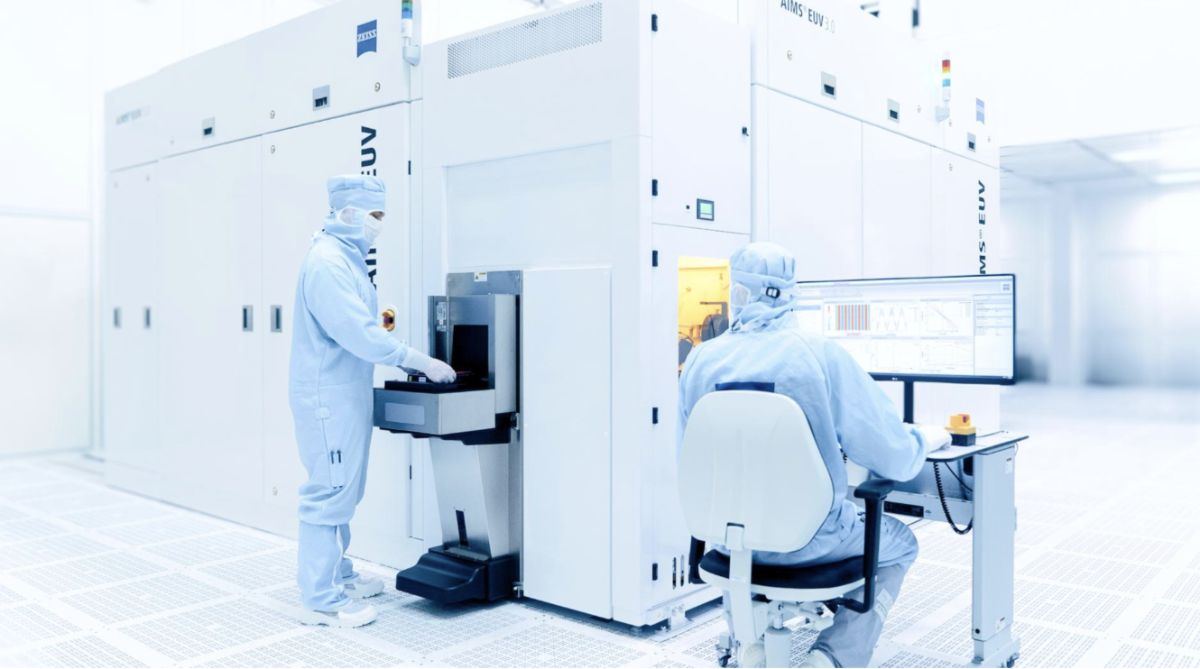
This is a vacuum chamber at the Carl Zeiss factory in Oberkochen.
The speed at which artificial intelligence can ‘think’ depends on what happens in this room.
AI runs on parallel processing. This is a computing method that increases speed and efficiency by simultaneously executing multiple tasks across multiple CPU cores.
The ‘braincells’ of these cores are transistors. The more transistors you can fit on a computer chip, and the less distance between them, the better your computer can think.
Which means the smaller your transistors, the more brain power you have.
This is the current AI hardware hierarchy:
NVIDIA designs GPU architectures like ‘Rubin’ and ‘Blackwell’. But they own zero factories. They are really a ‘fabless’ IP entity, entirely dependent on the physical layer.
For the hardware, they depend on Taiwan Semiconductor Manufacturing Company. TSMC is the world’s only high-volume builder of 3 nanometer and 2 nanometer ‘logic’. These are the processors that go into NVIDIA’s chips.
Again, though, TSMC is just a service provider. They assemble what they sell. But to do that, they need supplies they cannot produce themselves.
They, in turn, depend on a Dutch company called Advanced Semiconductor Materials Lithography. ASML is the only provider of Extreme Ultraviolet lithography systems.
The world’s most precise printing press
Think of EUV (Extreme Ultraviolet) lithography as the world’s most precise printing press.
Instead of printing words on paper with ink, this is the process of printing billions of transistors onto a slice of silicon using light.
For decades, we used regular ultraviolet light to make chips. But as we tried to make chips smaller and more powerful, that light became too fat.
It's like trying to write the entire dictionary on a postage stamp with a felt pen.
This is where EUV comes in.
EUV light has a much smaller wavelength.
A tiny beam of light allows engineers to draw patterns that are only a few atoms wide.
Brilliant. Problem solved.
Not so fast. Because there is, as always, a catch.
EUV light is delicate. It can be absorbed by almost everything — including the air we breathe, and, crucially, glass.
To keep the light from disappearing, the machine must create very particular conditions.
Which is why ASML’s lithography machines are not, as you can see, small or simple pieces of equipment:
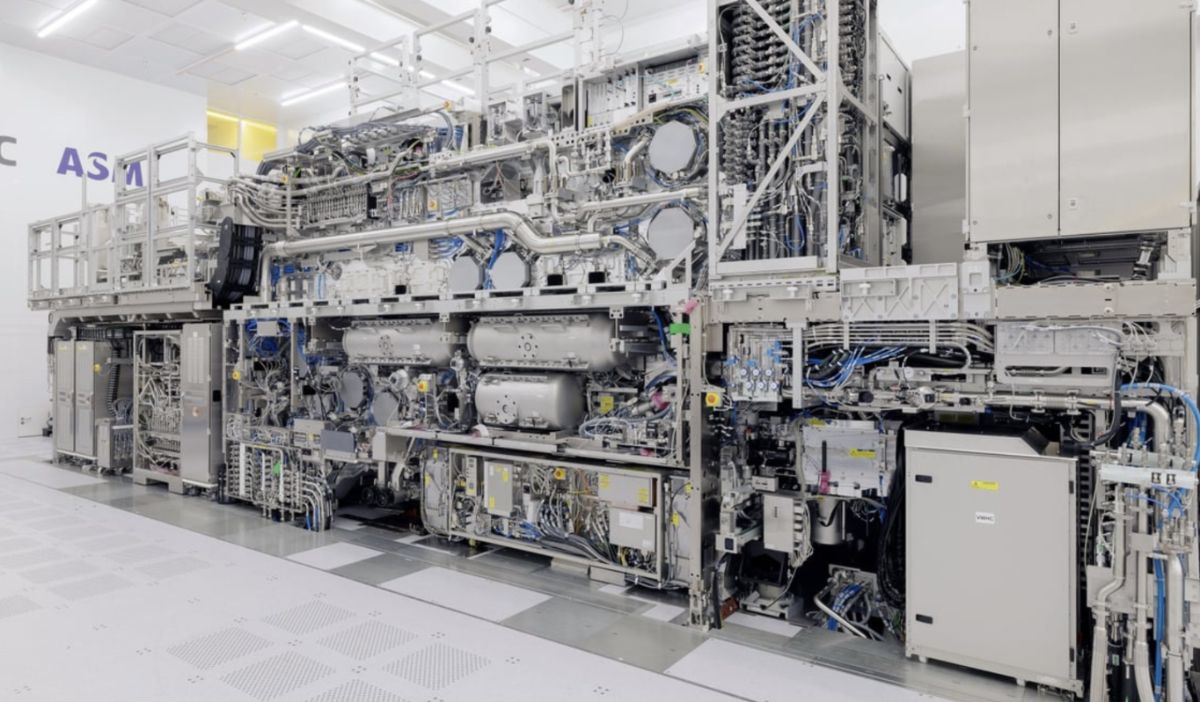
The newest generation of these machines is called the Twinscan EXE:5200.
This is the machine required for the next generation of chips the AI industry needs to keep up with demand.
As of April 2026, these bad boys run to about $400 million per unit — and require about another $100 million on top of that for shipping and installation.
And a large part of the reason why is that you can’t use regular glass lenses with EUV light.
You need mirrors. Very special mirrors.
Enter Carl Zeiss.
The world’s finest mirrors
The mirrors ASML depends on come from Carl Zeiss.
Zeiss SMT manufactures EUV mirrors using a process called Ion Beam Figuring.
They start with a 1,000kg block of zero-expansion glass-ceramic, then use an atomic ‘sandblaster’ to shave off individual atoms.
This achieves a surface so flat that if expanded to the size of Germany, the highest bump would be just 0.1mm.
These mirrors are so flat that a single misplaced atom can ruin the entire $400 million lithography machine.
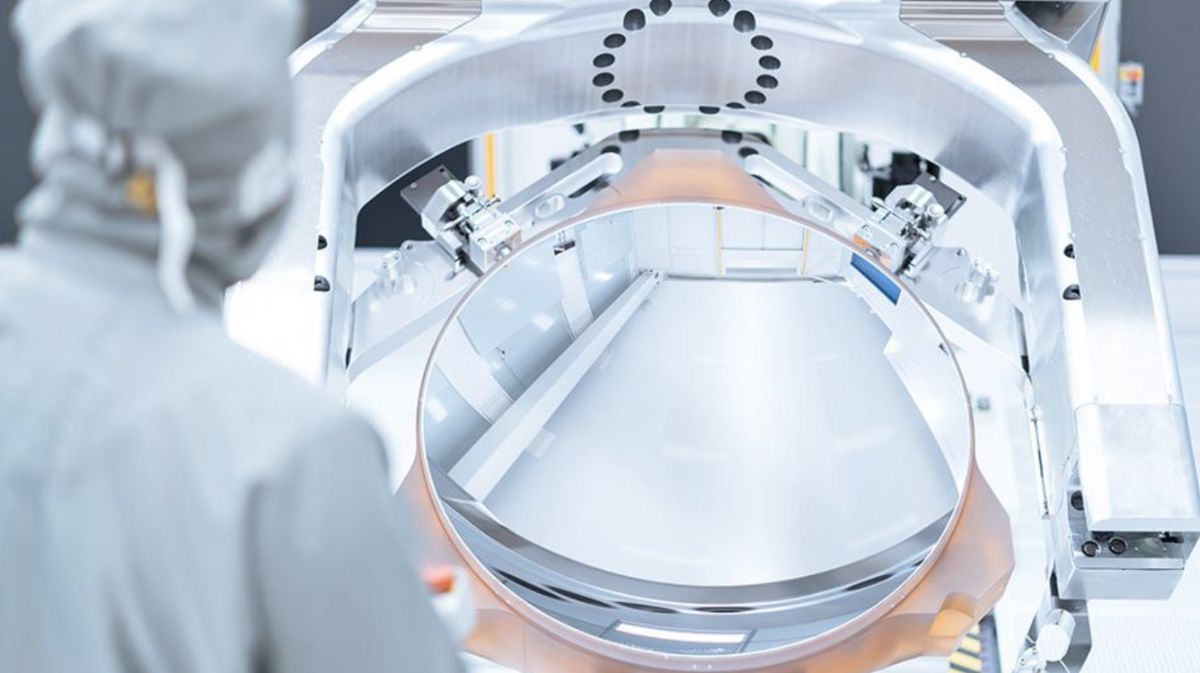
Each mirror takes about a year to grind.
Zeiss SMT mirrors must be flat to within 0.1 nanometers — an atomic-scale requirement that defies traditional mechanical polishing.
Which is why Zeiss is so valuable to the AI supply chain.
Each ASML lithography machine requires up to 16 of them — which accounts for much of their $400 million price.
Each specialized mirror set costs tens of millions.
But ASML owns a 24.9% stake in Carl Zeiss — so buying their mirrors is an investment, not just an expense.
Zeiss is the sole provider because they won a 30-year war of attrition.
While rivals Nikon and Canon abandoned EUV optics as physically impossible, Zeiss spent billions inventing Ion Beam Figuring to polish their mirrors to this grade.
Crucially, Zeiss also built the proprietary ‘metrology’ tools — the only machines capable of measuring that precision.
This is their moat. Competitors can’t catch up because they can’t even see the microscopic errors they need to fix.
In other words, Zeiss owns the only ‘eyes’ capable of seeing the future of lithography.
Smaller than ever is bigger than ever
AI is basically just a massive amount of math.
To do that math faster, you need more math units, or transistors, on a single chip.
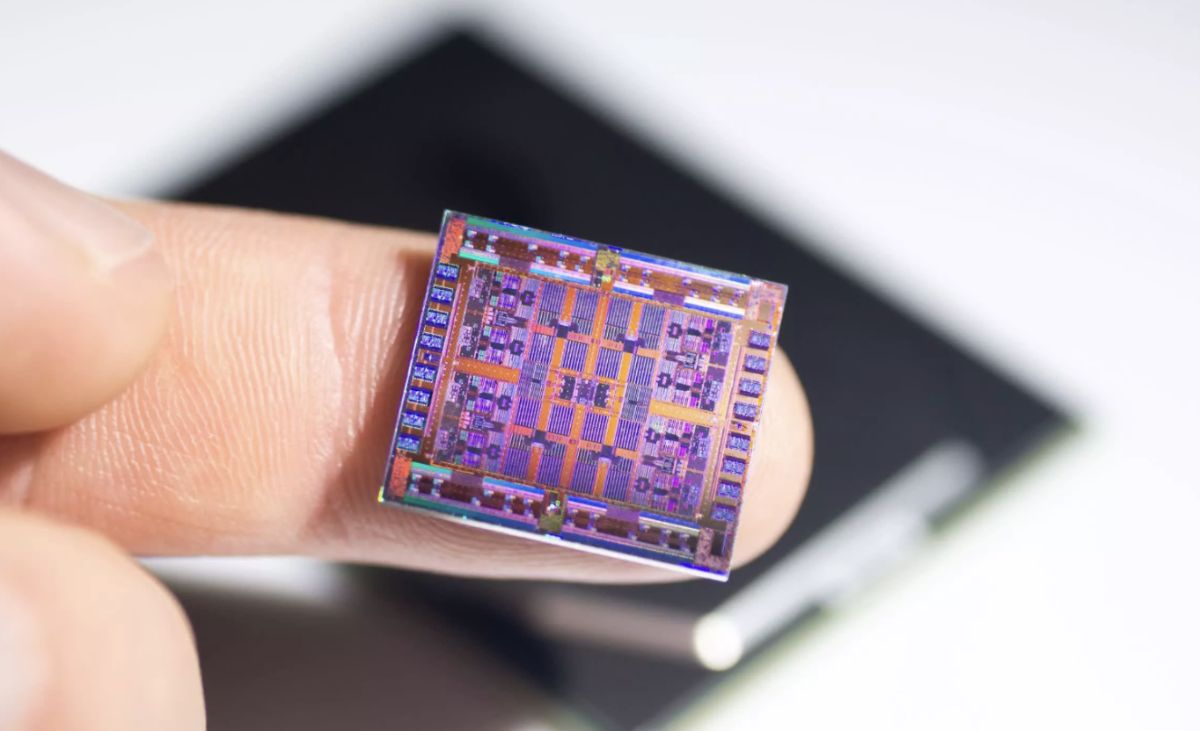
To do that, you need more finely-produced circuits. Which means machines capable of more precise lithography.
The current 2nm chips are hitting physical limits.
They consume too much power and generate too much heat for AI to perform any better than it already does.
Which is what the AI industry is racing to solve right now.
The next leap will be to 1.4nm.
The physical chip will remain the size of a fingernail. What changes is the resolution — packing billions more transistors into that same space.
The chip features will become about six atoms wide.
For scale, a strand of DNA is 2.5nm.
Shifting to 1.4nm provides a 15% speed boost or 30% power reduction. You can pack 20% more transistors into the same space.
But greater precision requires more focused EUV.
And more focused EUV requires flatter mirrors than ever to steer the light beams which create the atomic-scale patterns on the silicon.
Since each mirror set takes over a year to grind, Zeiss is the physical bottleneck for the entire AI revolution.
Which is why…
Taiwan vs. USA
TSMC currently dominates the semiconductor market, building chips for Apple and NVIDIA.
But they are delaying their shift to the latest ASML machines to save on costs.
Intel, on the other hand, is racing to be the first to install the EXE:5200 at its Oregon factory.
They’re betting everything on the 1.4nm frontier.
Intel hopes to overtake TSMC’s technology.
And they’re not alone.
The US government took a 10% stake in Intel in 2025 for $8.9 billion, deploying taxpayer dollars in an effort to secure domestic 1.4nm chip manufacturing.
As of April 2026, Intel’s resurgence has pushed the stake’s value to over $41 billion.
Today’s battle for AI supremacy has its origins in the dying days of World War II in Germany…
...and it rages on — a fierce collision of cutting-edge (so to speak) tech, insatiable demand for computational power, and a remarkably exclusive, high-stakes supply chain reaching from southern Germany to Silicon Valley via the Netherlands and Taiwan, and perhaps, soon, Oregon.
This week's quote:
“The working hand should have no other function than to precisely implement the shapes and dimensions of all the design components determined beforehand by computation.”
— Carl Zeiss, 1816 – 1888
Invest in knowledge,
Thom
The Benchmark
Read more: Bitcoin: 21 Truths in 2026
Share: Forward this email to someone you know would appreciate it.
New here? Subscribe to The Benchmark.
Enjoyed this issue?
Subscribe to The Benchmark
Weekly insights on markets, investing, and portfolio strategy.