The connection between coal-fuelled Nazi fighters & today’s diesel crisis
On May 12, 1944, the US Eighth Air Force flew bombers into central Germany with an unusual target list.
What if this time, it is different?
The most dangerous words in investing might hold
the answer to why the financial world seems to be collapsing and booming at the same time.
Hey ,
Thom here — co-founder of Navexa.
I've got different kind of email for you today.
Everything is better, and worse, than ever.
Asset prices are at, or near, all-time highs.
But so is government debt, housing unaffordability and the cost of living.
One moment, you’ll hear about AI coding company Cursor hitting $100 million in annual recurring revenue within 24 months…
The next, you read that the Great Depression is playing out again like clockwork 100 years hence.
One commentator argues we’re at the (disruptive) dawn of a new golden age of technology and abundance.
While another shows credible evidence this is really a late-stage capitalism ‘melt up’...
And we’re poised to plummet off an economic cliff into a financial dark age.
Which means one side must have it all wrong, right?
Maybe.
But, maybe not.
You don’t have to look far to find pretty convincing reasons to believe both sides.
I’ll show you strong evidence for each in a moment.
You’ll see the bad news and the good news.
But more importantly, you’ll see a third point of view:
That the bad news relates largely to the old world.
While the good news relates to the new world.
The systems we built to measure prosperity in the economy of the 20th Century are now signalling their own decay.
Meanwhile, the engines of the next economy — AI, energy, and code — are roaring to life.
PART I: The Old World Collapsing (The Doom Data)
If markets, as they say, climb a wall of worry, then they’re climbing dangerously high right now.
Feeds saturated with doom. Headlines forecasting collapse.
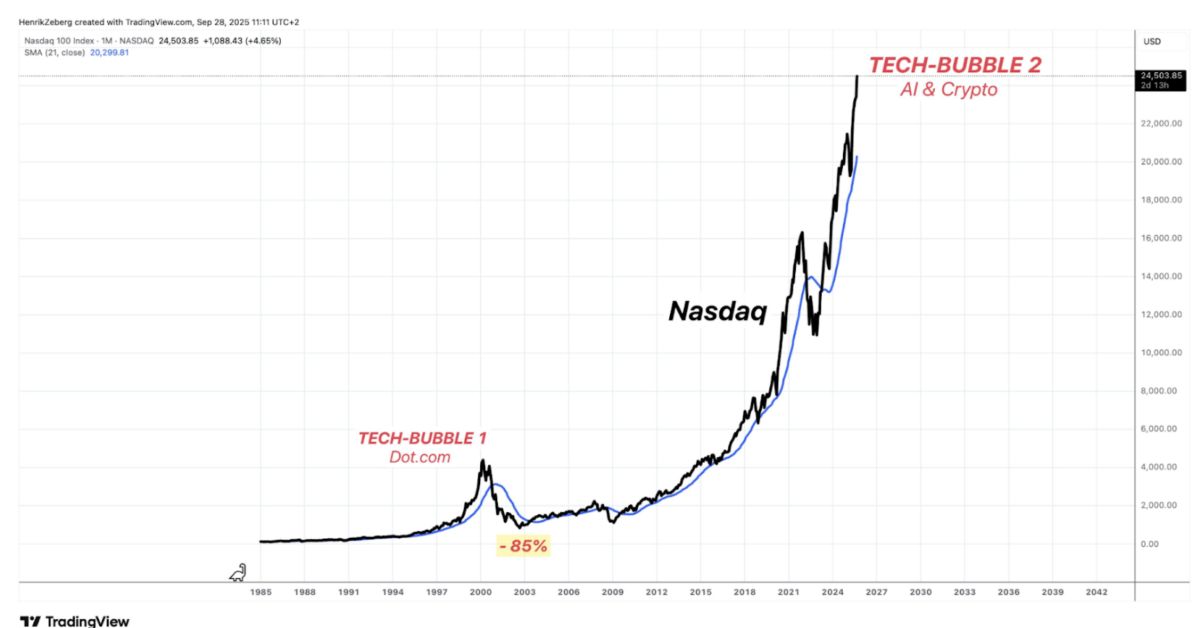
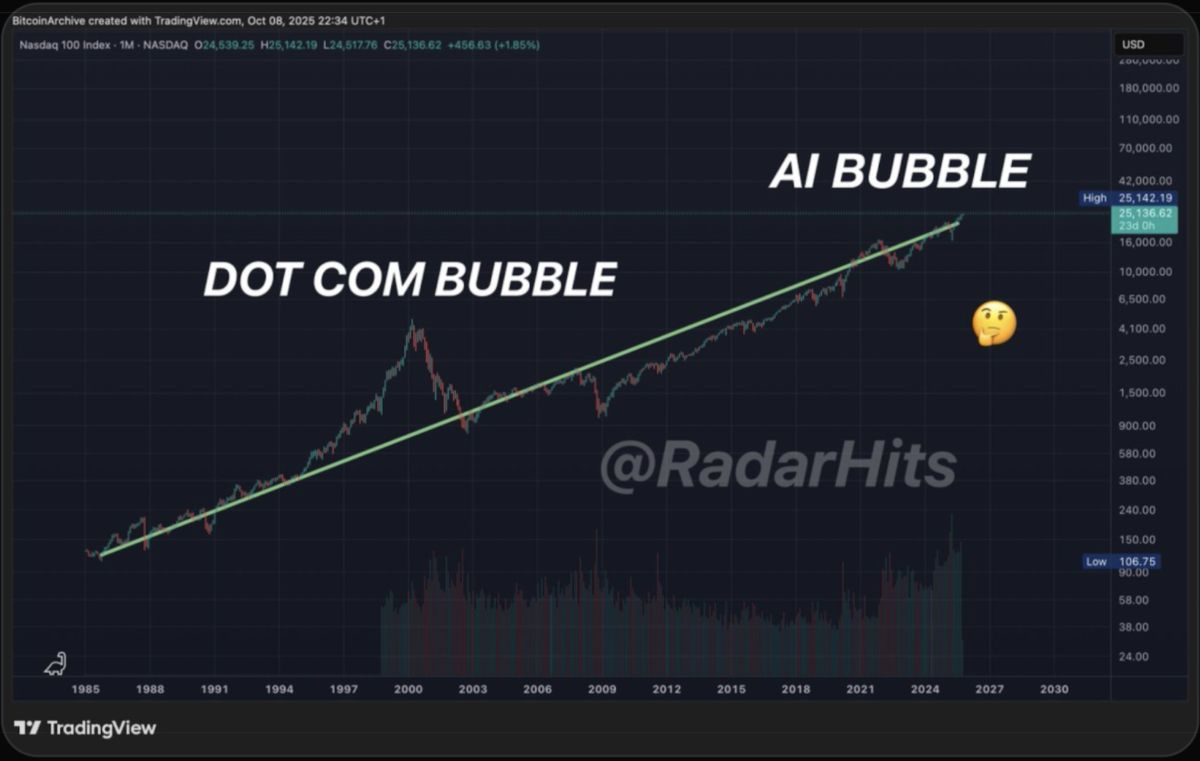
Annotated crash charts predicting a second tech bubble litter every platform:
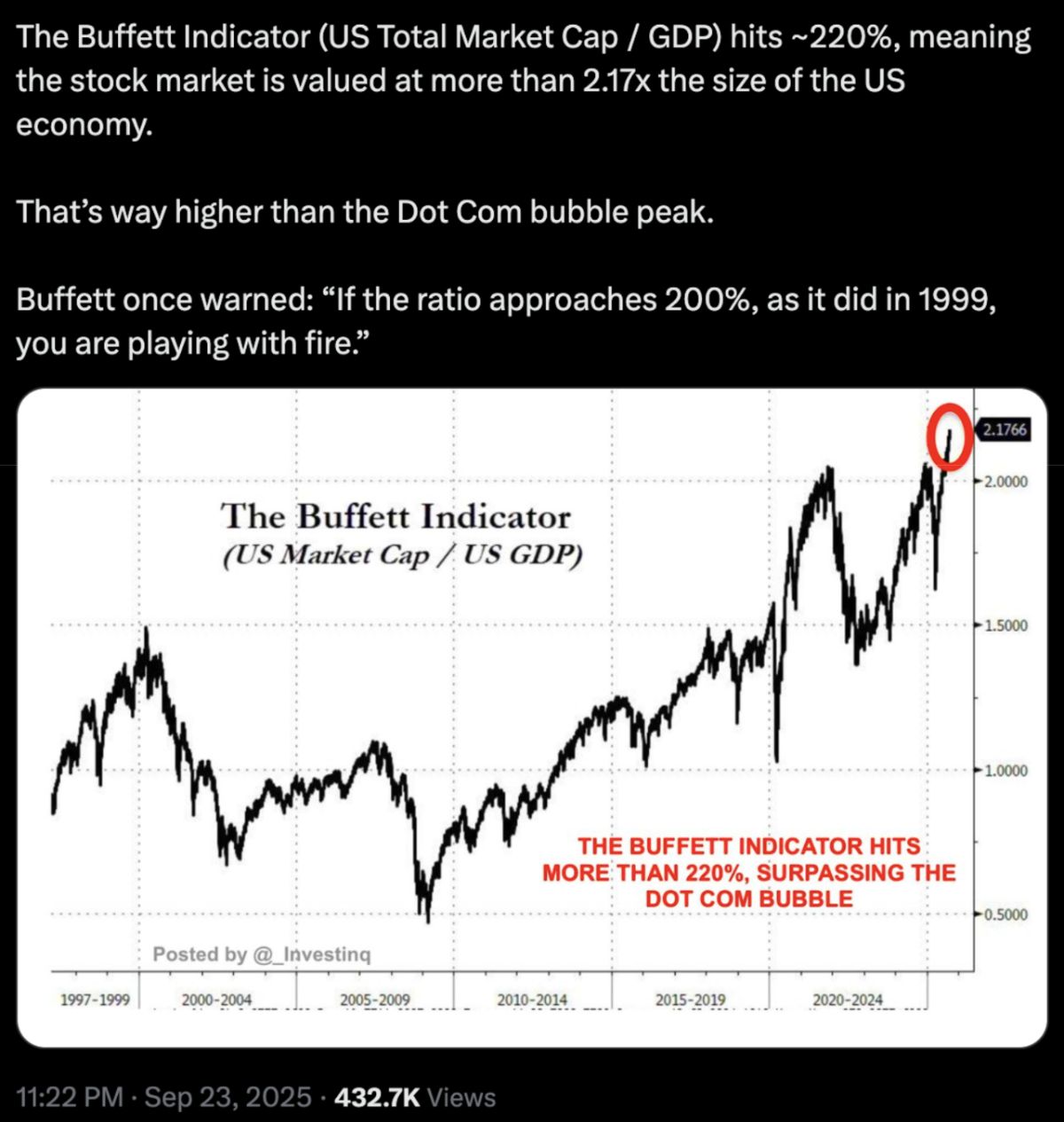
The Buffet Indicator — the market’s favorite over-valuation gauge — is higher now than at any point since 2008:
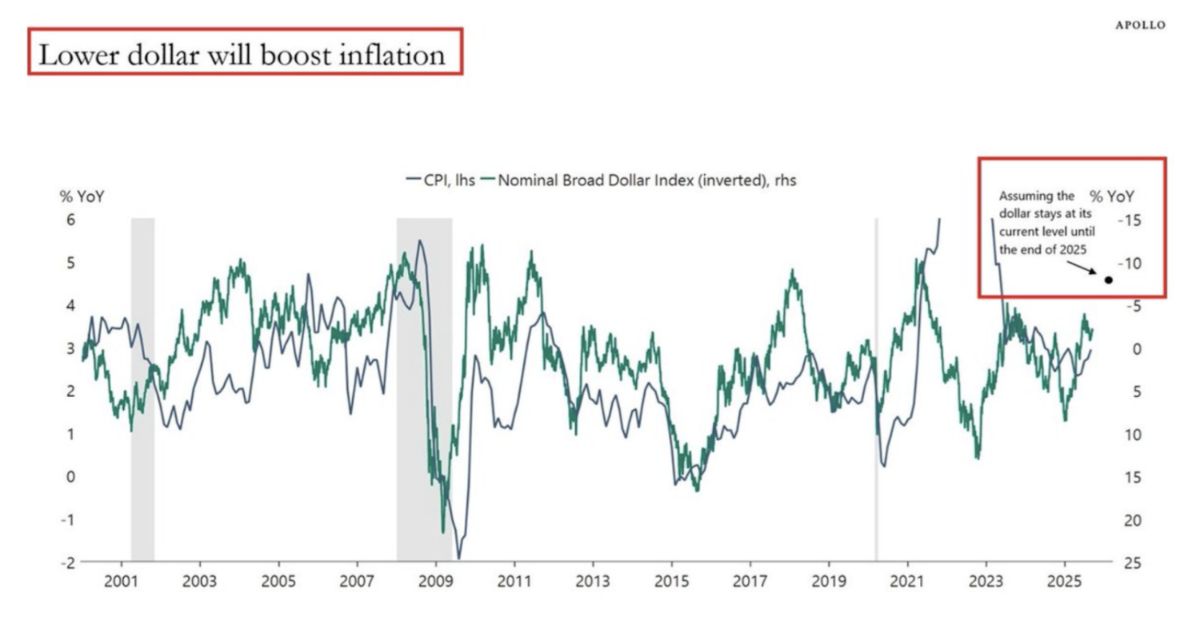
Inflation still runs hot despite tariffs, trade wars, and a weakening dollar:
There’s confronting evidence that everyday people are increasingly strugglingin an economy that’s only making it tougher:
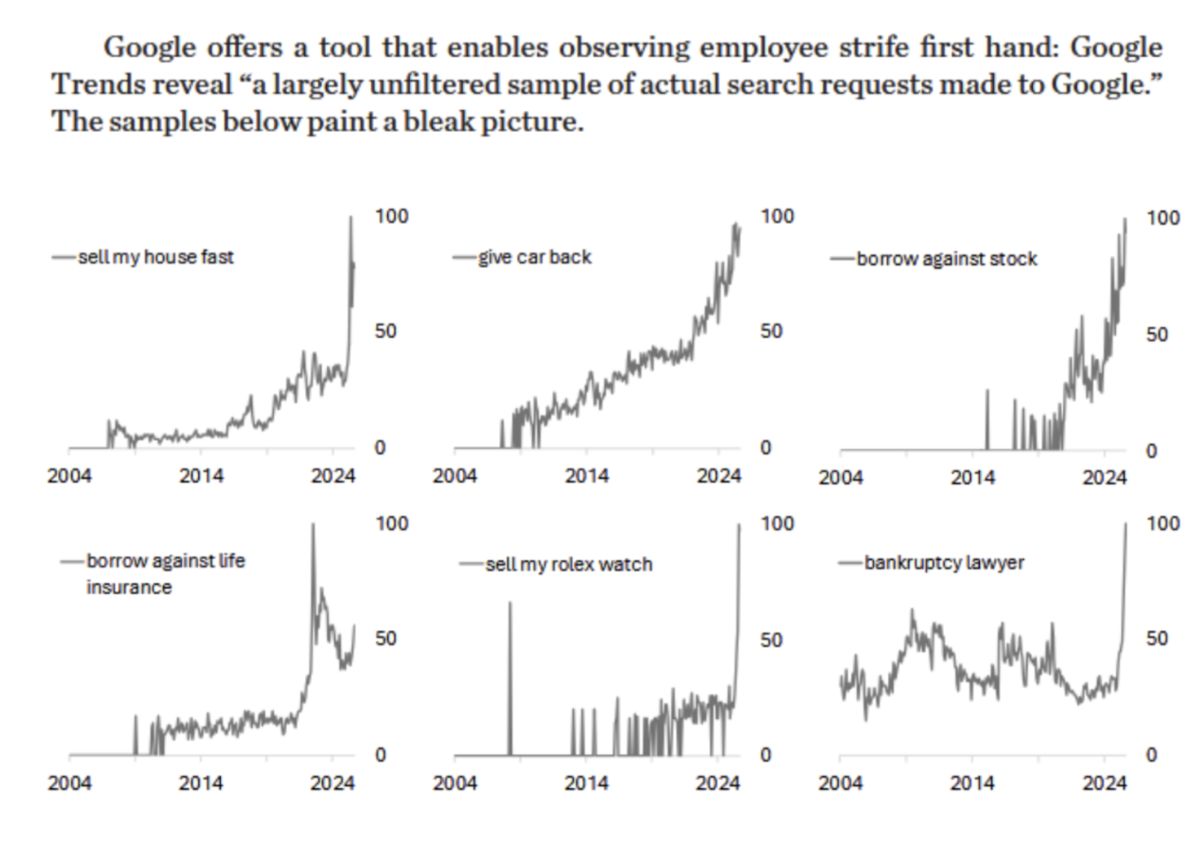
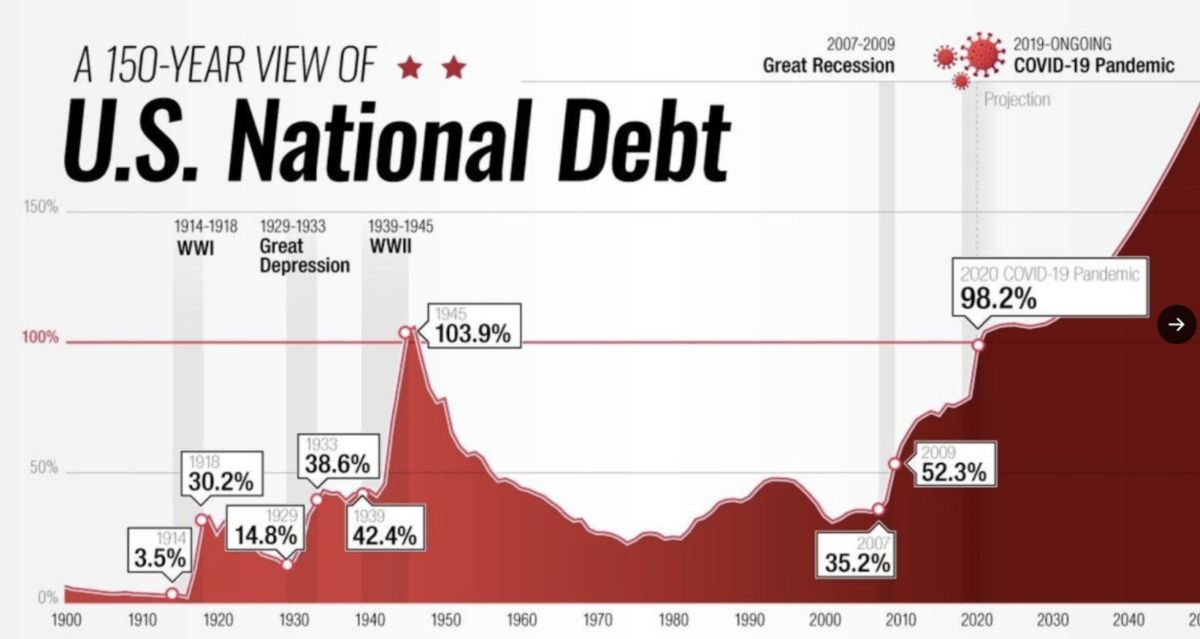
While the U.S. — issuer of the world’s reserve currency — now looks disturbingly close to broke.:
On top of this, Big Tech stock dominance is concentrating stock market performance down to just a handful of companies — which is exactly what happened just before the 1929 crash that kicked off the Great Depression:
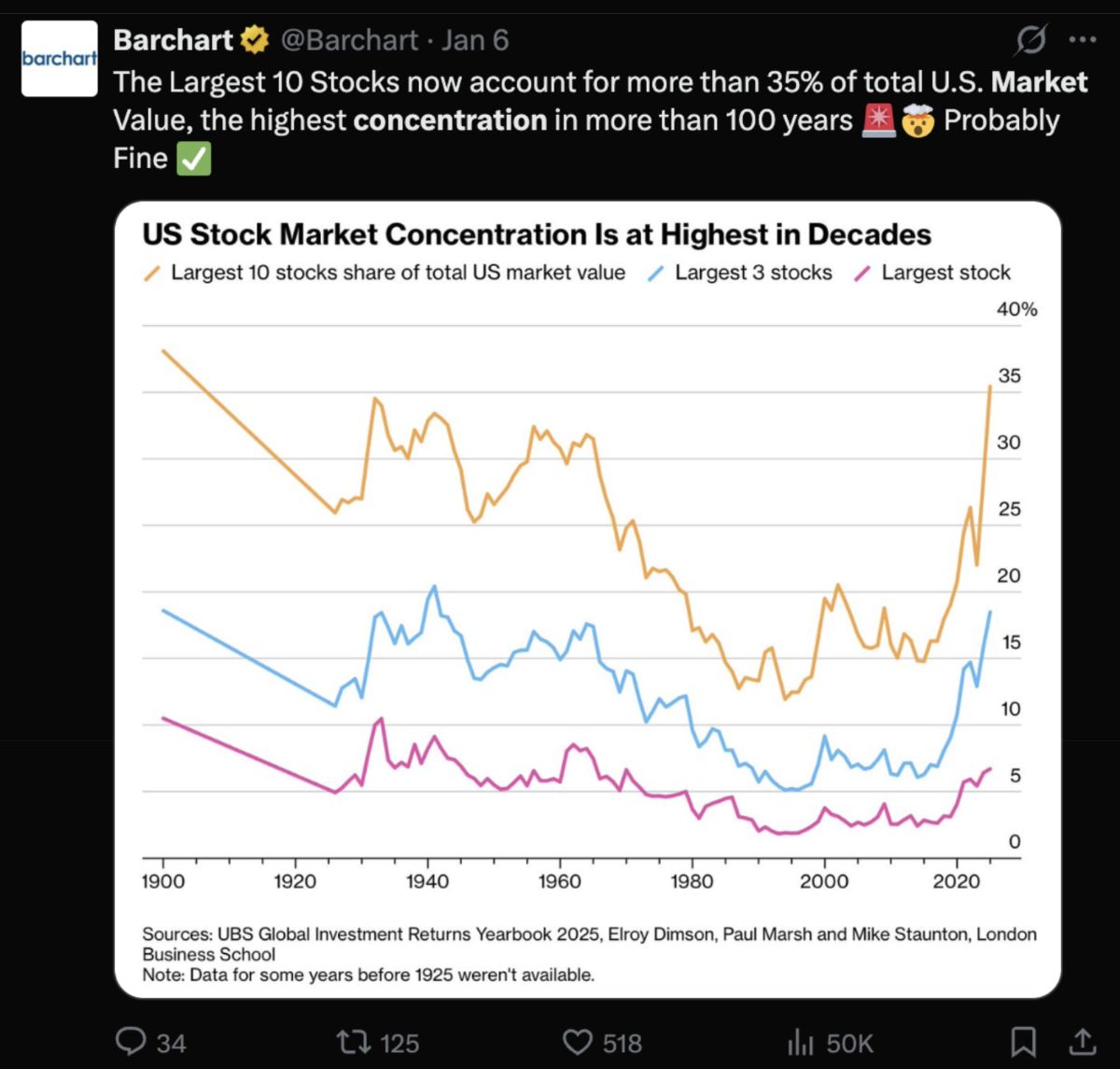

In many ways, there’s never been so much pessimistic fuel to power investors’ fears and anxieties.
So it’s no surprise that, despite stocks having just made new highs, and the Federal Reserve just cut interest rates, many investors are worried about the market right now.
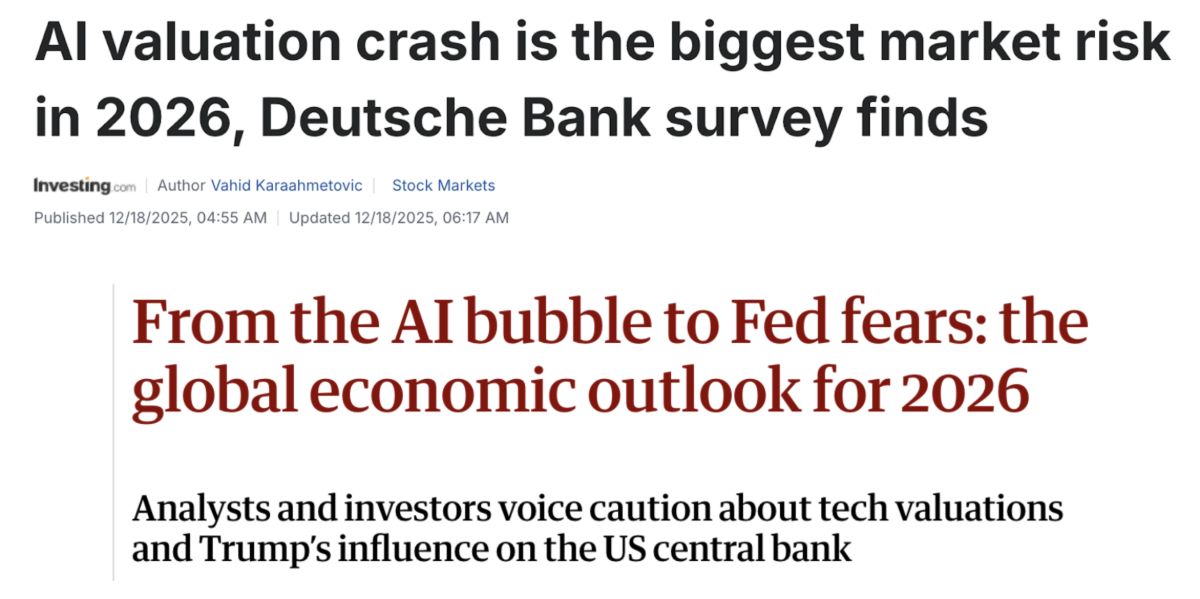
All of the above charts and indicators come from expert analysis and hard data.
And yet…
PART II: The New World’s Ascent (The Boom Data)
The S&P 500 and the NASDAQ hit new all-time highs throughout 2025.
They’ve both nearly doubled in the past half a decade:
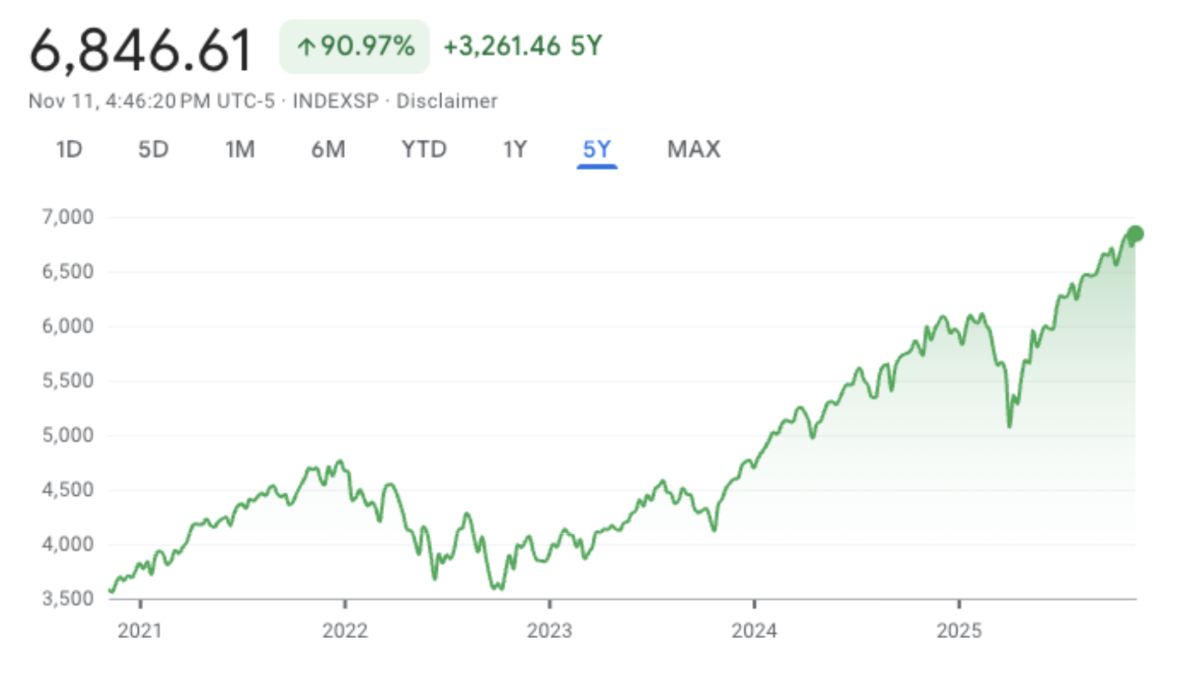
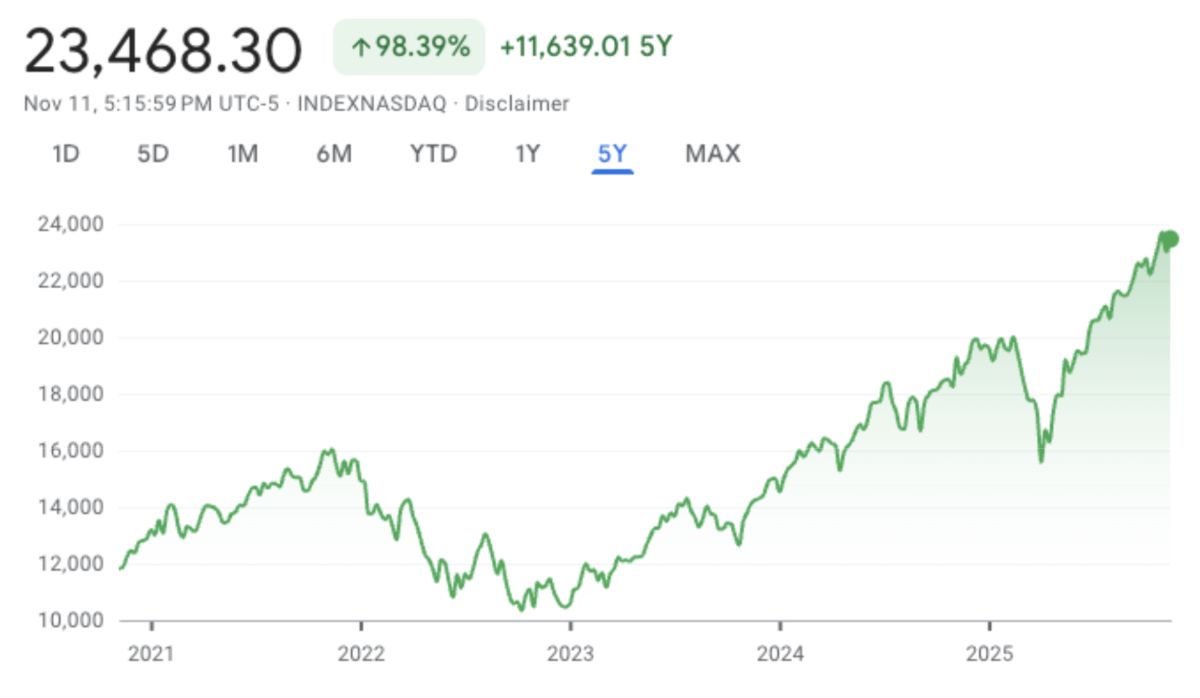
These rallies, by the way, are happening against a backdrop of quantitative tightening, as opposed to the low/no interest rate policies that fuelled the market’s post-2008 run up.
The pessimist calls this money-printing disguised as growth.
But the optimist could just as quickly point out that this growth is down to a new breed of businesses and technology…
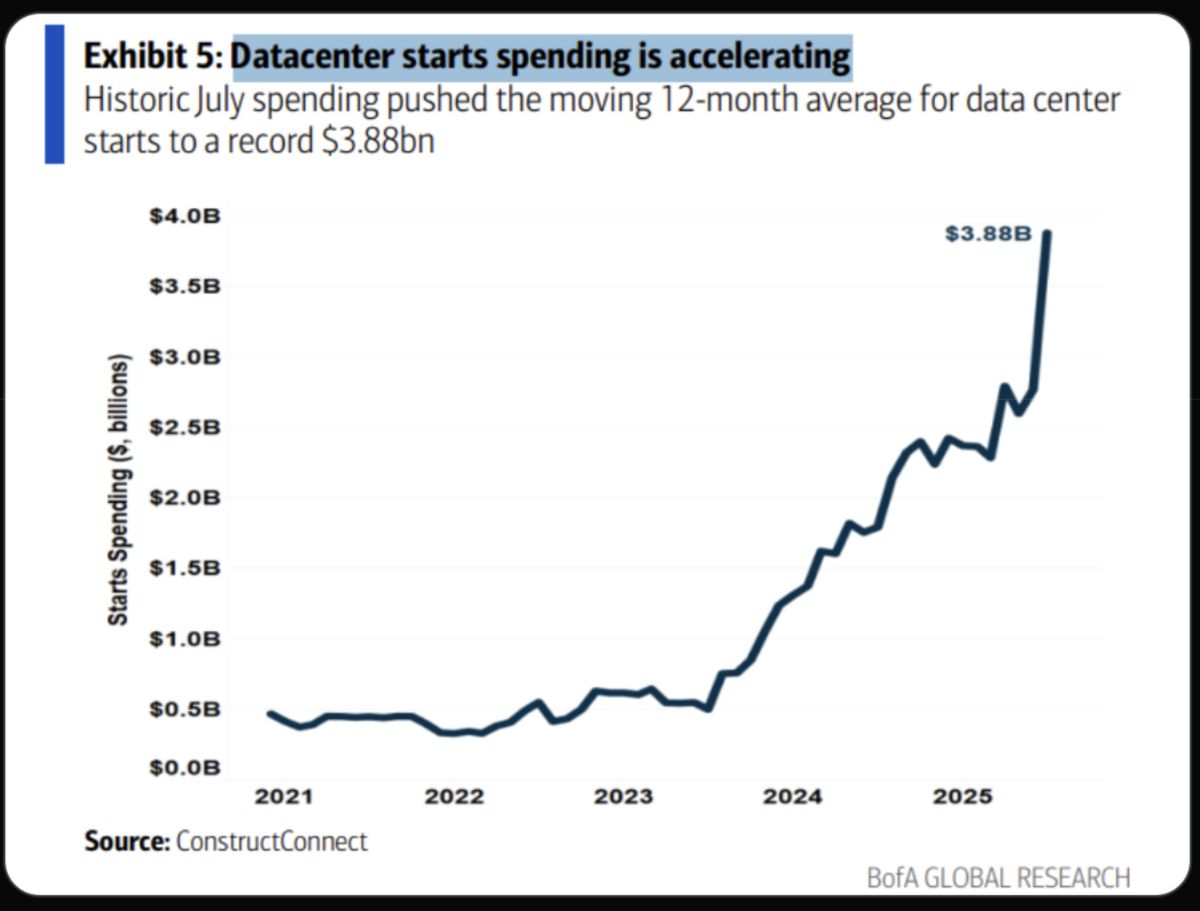
That the Nvidia-led artificial intelligence arms race isn’t just transforming consumer and commercial tech faster than any previous step-change…
That it’s actually driving an unprecedented surge in infrastructure spending, as the world scrambles to prepare for a compute and energy-driven future we could barely have comprehended just 24 months ago:
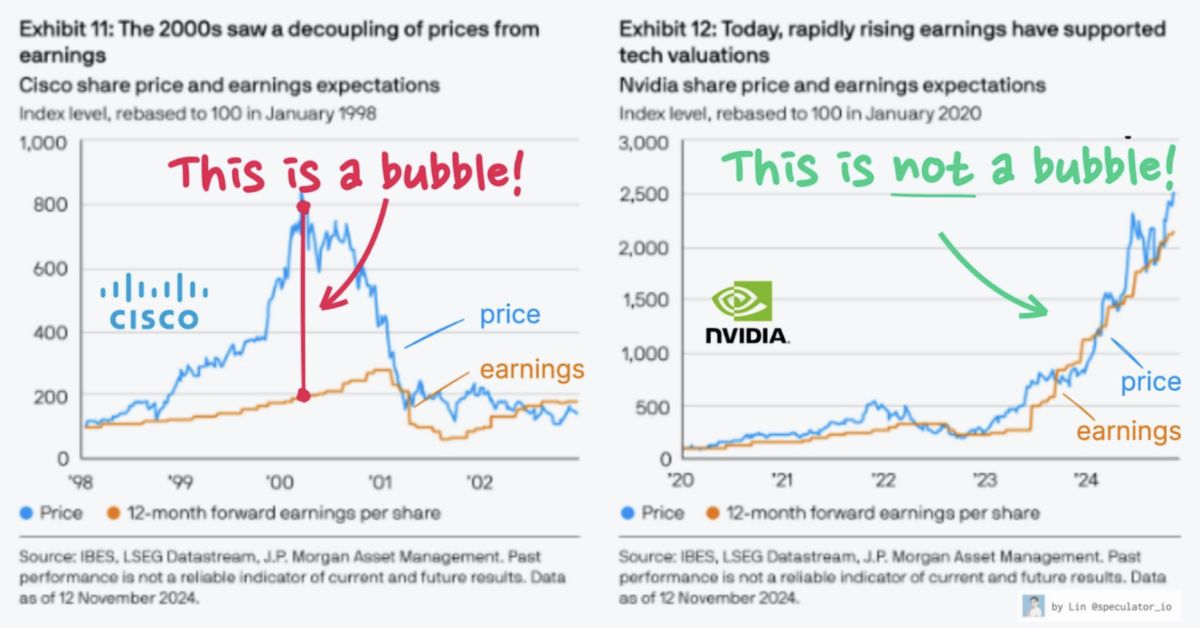
That the people screaming about the critically overstretched market, and the about-to-burst tech bubble, are actually just making noise, when the signals show good times ahead:
And that, while Google searches might indicate unprecedented levels of economic hardship…
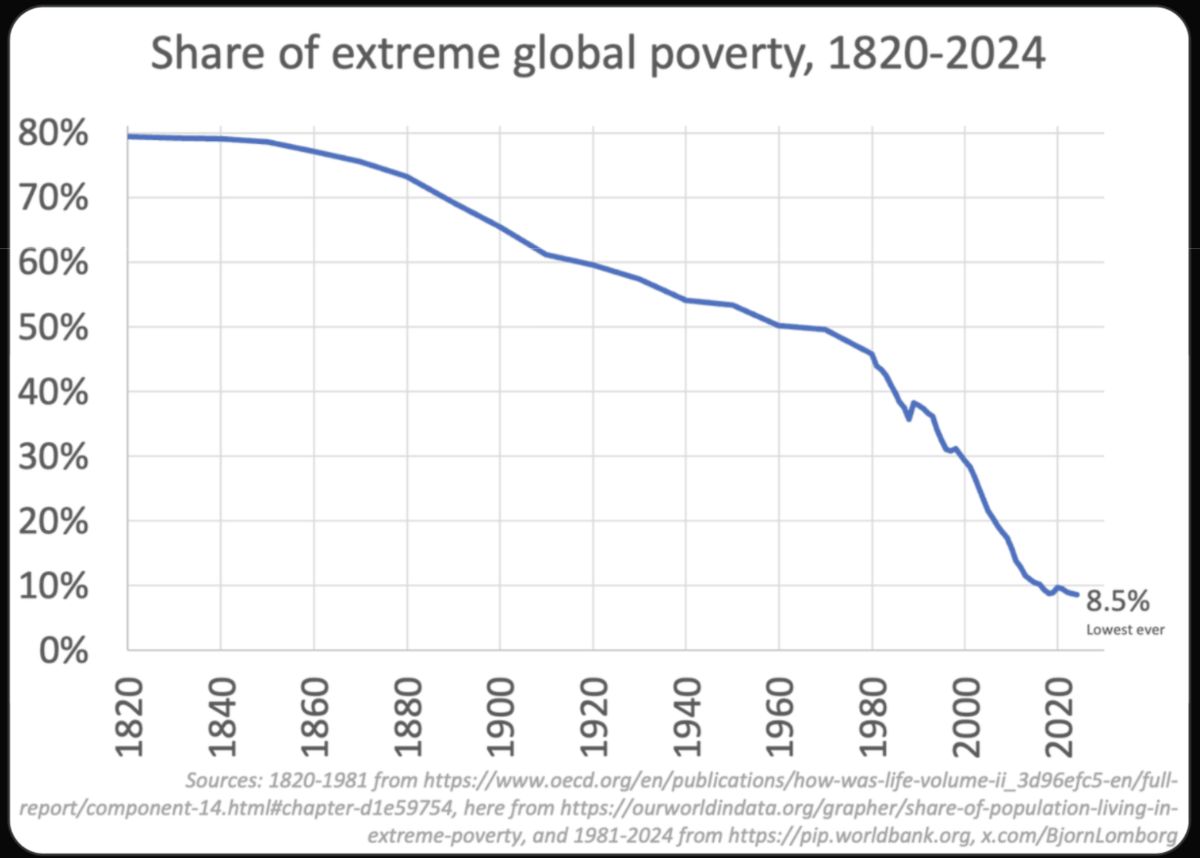
On balance, people living on Earth today are far better off than they’ve ever been:
There’s plenty of proof for both stories.
It just depends on what you want to believe.
Yes, stocks are trading at eye-wateringly high levels.
Yes, search traffic indicating severe financial stress is spiking.
Yes, the US national debt looks like it will only keep piling higher.
But…
Money is flooding into AI and AI infrastructure stocks.
Corporate earnings, unlike with the 2000 tech bubble, are in some cases keeping up with the rising valuations of today’s mega tech stocks.
Some even make the case that the stock market is pretty much trading at a ‘fair value’ trend, and is nowhere near as frothy as it was pre-2000.
And, despite spiralling debt and rampant inflation, the world is trending towards eliminating extreme poverty.
But here’s the truth hiding in plain sight:
Everybody is correct.
The market is overextended — valuations are stretching, debt is ballooning, and the Buffett Indicator is screaming déjà vu.
And yet, at the same time, it’s booming like never before.
AI spending is exploding even under tightening liquidity.
Microsoft, Amazon, and Google are investing record amounts of capital to expand data center capacity — not just because they can, but because they have to.
The indicators everyone trusts are still measuring the old financial world.
But a new one has started trading underneath it.
That’s why every signal seems contradictory — GDP says slowdown, while Nvidia posts 200% revenue growth; bond markets price a recession while Nasdaq hits new highs.
When you look for a single truth in all this contradiction, confusion is guaranteed.
But when you accept that the financial world is, in fact, now two worlds…
You start to see the pattern.
One world runs on credit, policy, and paper — the machinery of the 20th century.
The other runs on compute, code, and collateralized energy — the machinery of the 21st.
PART III: The Crossroads Where The Old & New Financial Worlds Meet
Once famously derided by Warren Buffett as ‘rat poison squared’, and dismissed by respectable investors the world over as a fraud, a ponzi, and various other damning things…
Bitcoin is now in the midst of mass institutional investor, corporate, and government adoption.
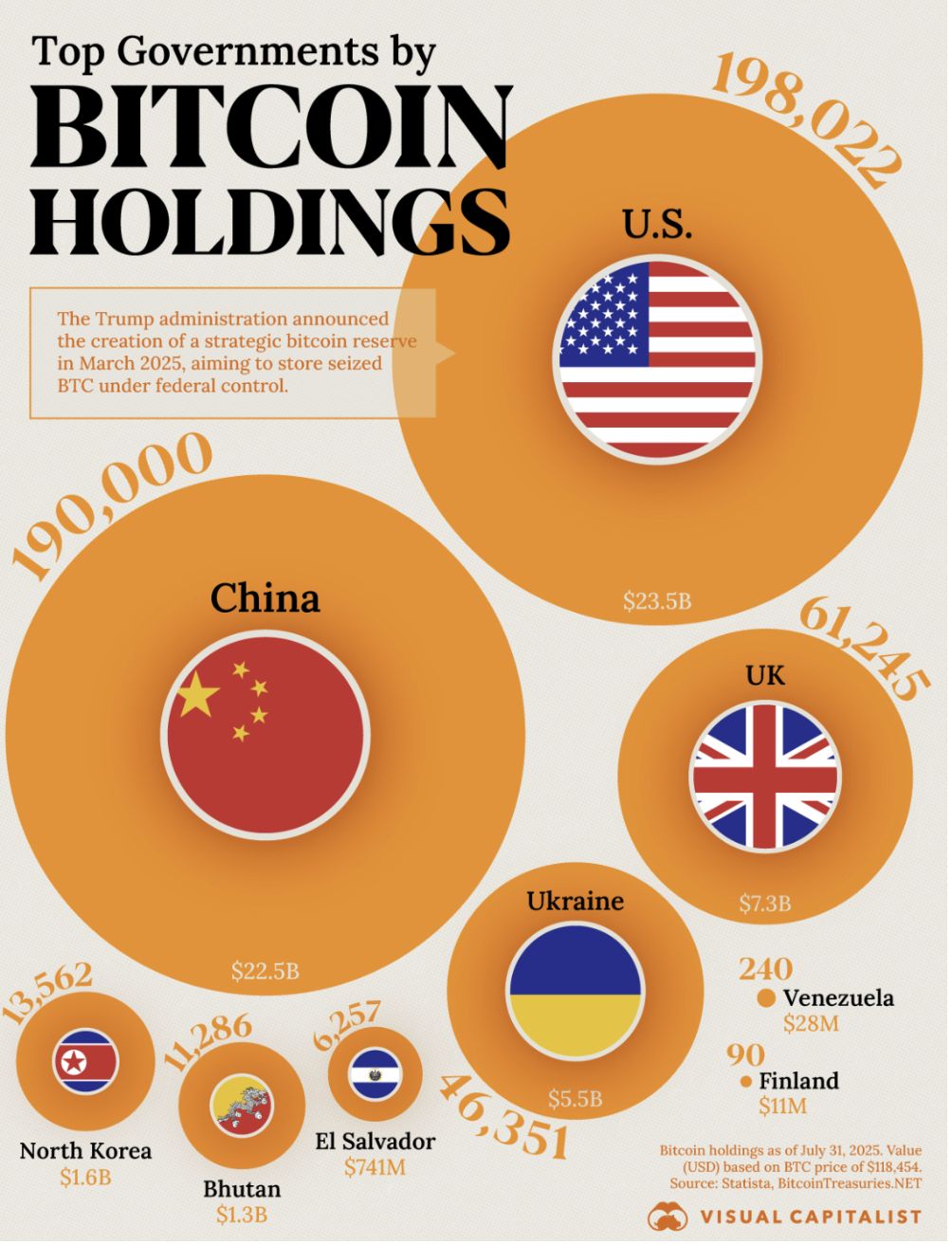
Governments are holding and/or acquiring more, Bitcoin:
About 140 publicly-traded companies now hold Bitcoin on their balance sheets, or have become outright ‘Bitcoin treasury’ companies, like Michael Saylor’s Strategy:
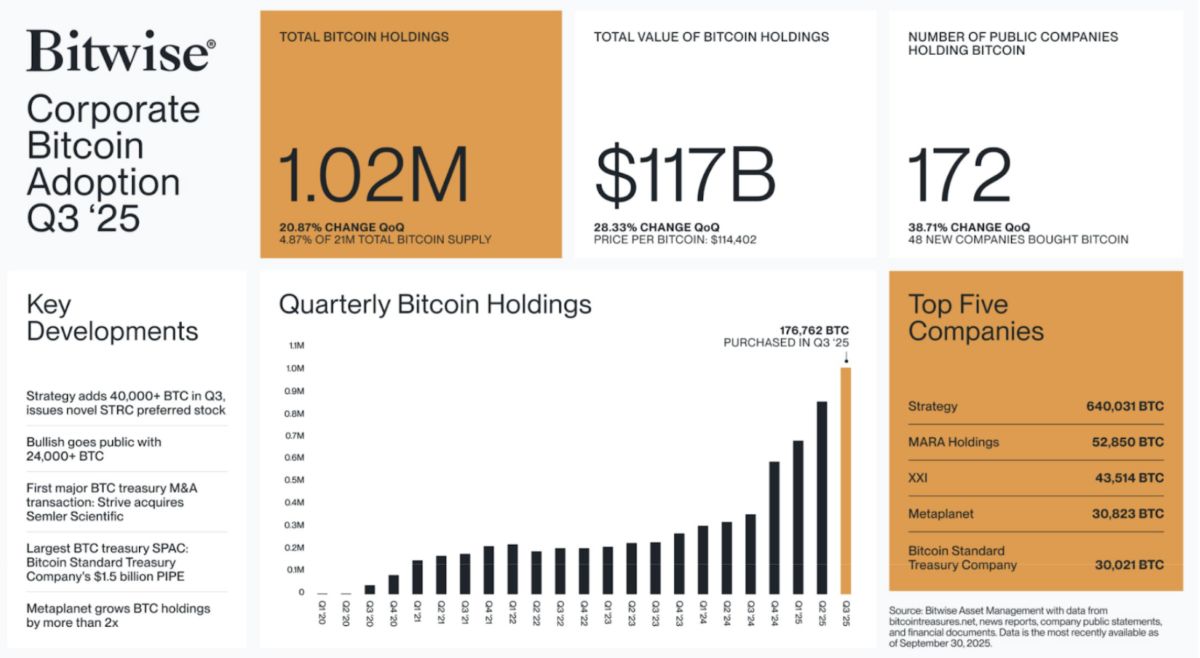
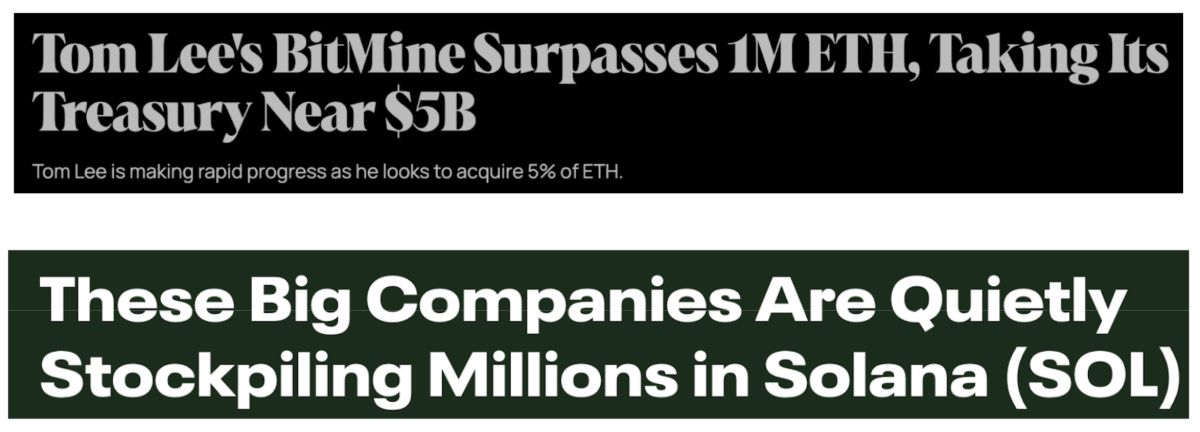
The same trend is now showing up in Ethereum and Solana, two competing networks.
Treasury companies are now going public with their plans to buy and hold vast quantities of digital assets:
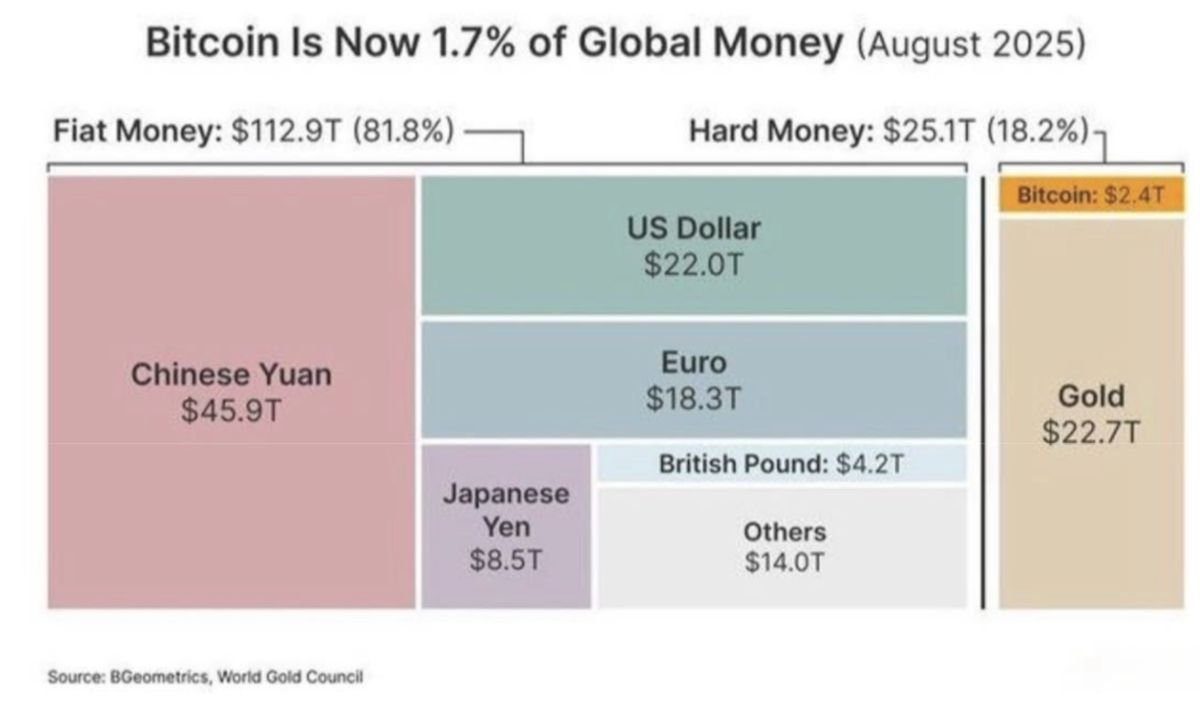
By August last year, Bitcoin accounted for almost 2% of total global money.
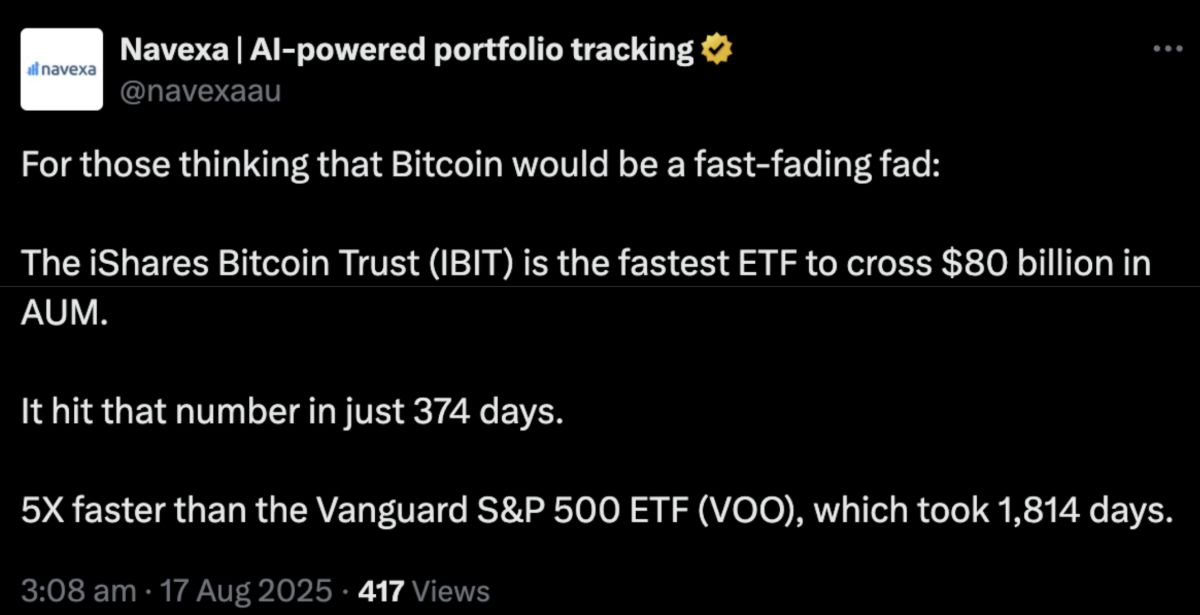
While BlackRock’s IBIT quietly became the fastest ETF in history to cross $80 billion in assets under management:
And there’s a growing chorus of voices, both on and far from Wall Street, signalling that we’re now living in a new paradigm — one in which fiat currencies reach the end of their useful life, and the world returns to sound money (except this time secured by energy-backed digital networks, instead of precious metals).
While the old financial world looks and feels as though it’s collapsing into obsolescence.
The new one is travelling in the opposite direction.

So if we’re living through the Great Depression AND the Roaring ‘20s at the same time… how do you navigate what’s coming?
Yes, we are in many ways in a New Great Depression.
The debt. The currency debasement. The clearly spiking financial emergency search queries.
Property is more out of reach for people than it has ever been.
The Buffett Indicator and other metrics are screaming that something bad is imminent.
And yet, you can’t deny these are boom times, too.
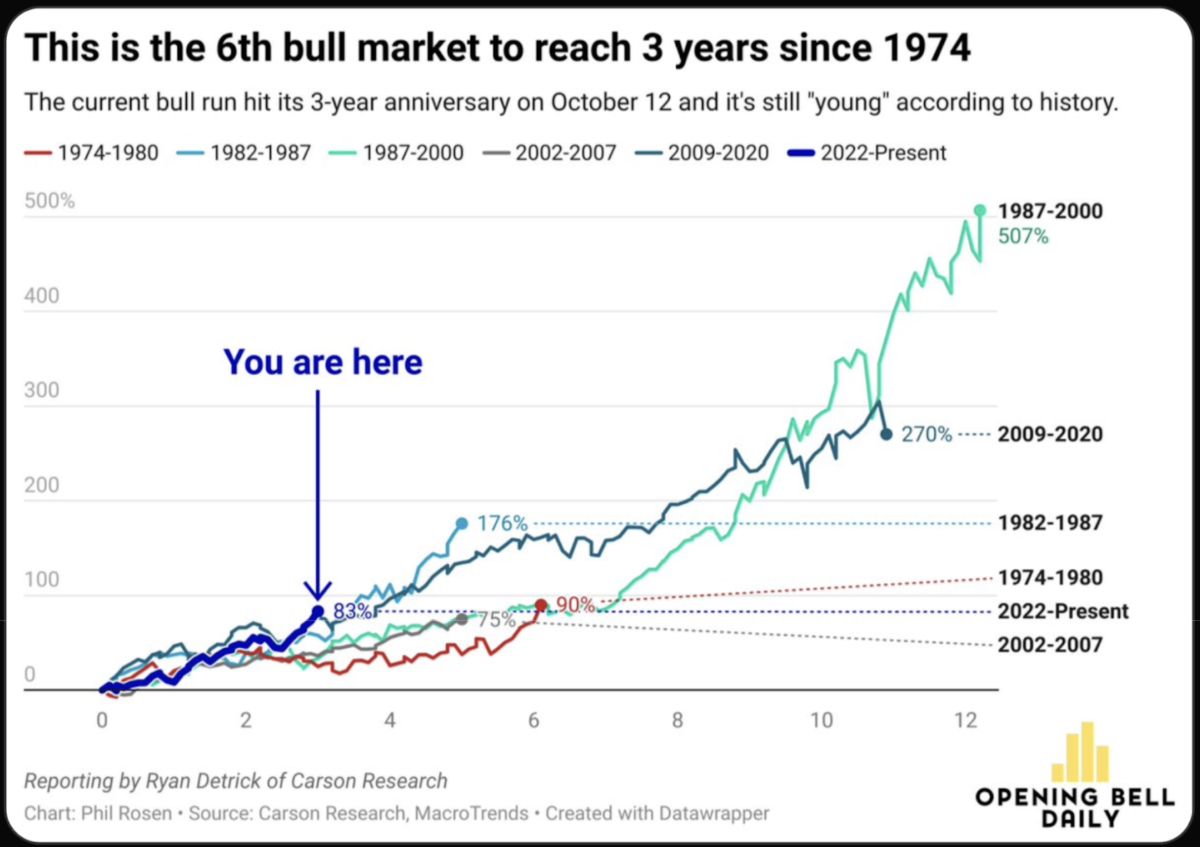
What if this is just year three of 12 for the current bull market in stocks?
What about when you look at the trendline of the NASDAQ’s performance instead of just getting hung up on the parallels with the Dot Com bubble?
Or the colossal AI earnings and infrastructure investment playing out right now…
The fact that extreme poverty is rarer today than it has ever been…
Or the fact that Bitcoin has gone from Wall Street punching bag to Wall Street favourite in just 16 years.
You can find plenty of evidence for both narratives.
Because these are two concurrent truths.
One is the reality of credit, policy, and paper — the crumbling foundations of the old world.
The other is the theoretically infinite promise of compute, code, and collateralized energy — the systems of the new.
The tension between them is where the opportunity, volatility, risk and reward will flow from for the foreseeable future.
If you’ve read this far…
And you’ve found these ideas resonating…
Then you’re probably going to like my free weekly email about money, markets, and the stories we tell ourselves about both.
Before I share the details, let me quickly explain where this project came from.
In July 2020, I wrote an essay with a friend who’s a blockchain engineer:
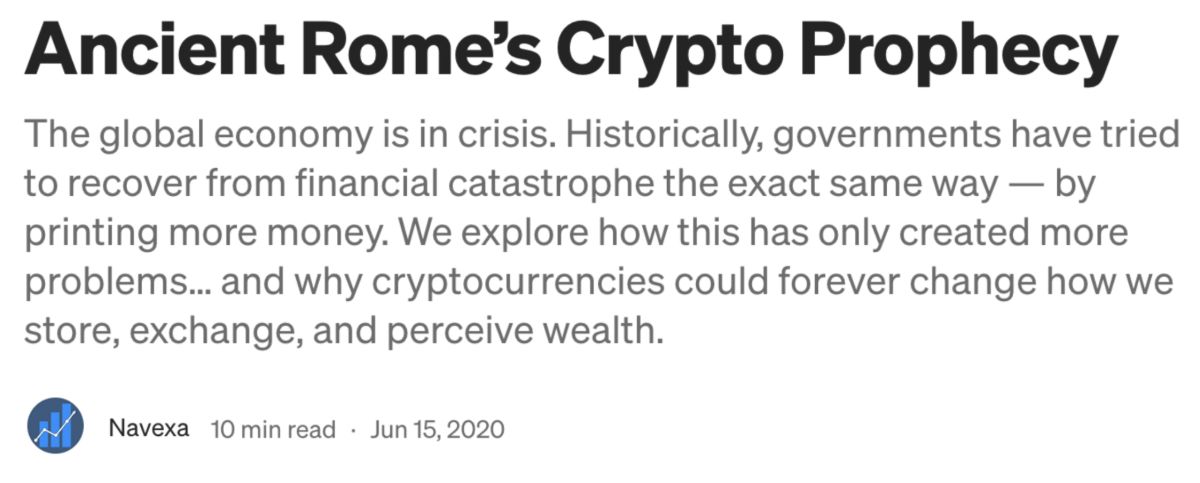
The piece explored the idea that fiat currency, and the governments that continuously debase them, tend to lose on a long enough timeline.
We considered Bitcoin’s place in that equation.
At the time, BTC wasn’t even worth $10,000 USD, and a long way from its relative mainstream popularity today.
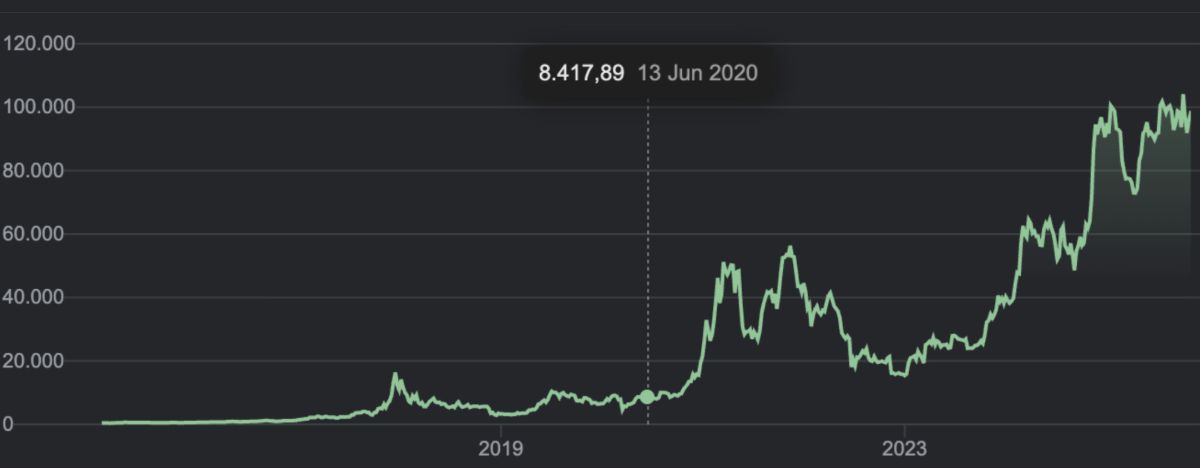
While we didn’t make any predictions on price (in hindsight, I wish we had), you can see in the chart what the original crypto asset has done since we published.
But perhaps the more important chart is this one:
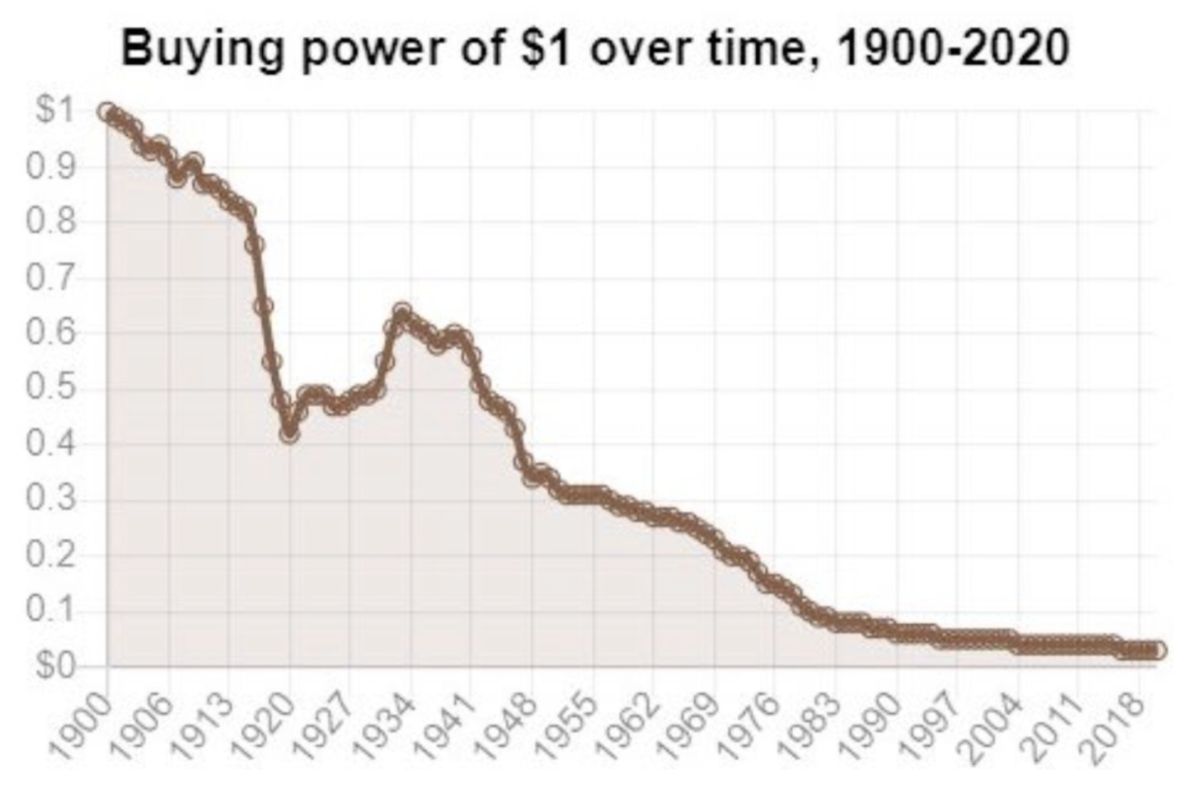
Our 2020 piece wasn’t so much about Bitcoin as about the undeniable impact that inflation and money printing has on people’s economic power.
More specifically, it was an exercise in perspective; on what we can learn about the financial and economic world when we zoom out and consider big trends and concepts.
This piece became the genesis of a project I experimented with in 2024.
I wrote 37 essays for a project I called The Benchmark.
The Benchmark is, simply, a financial newsletter I would want to read.
We made it available to our business’s email list.
About 2,000 people began to read my essays each week.
I covered ideas like:
I received many positive messages about the stories and insights I shared in The Benchmark.
From private investors in Australia to chief investment officers in Texas, former hedge fund managers in Washington, D.C., and crypto traders in the UAE.
Now, with the financial world appearing many times more exciting and fraught than it did way back in 2020…
I’m publishing The Benchmark again.
And this essay is my invitation to you to become a subscriber.
Here’s what you can expect when you do.
I write each using a powerful principle Benjamin Franklin expressed in the Eighteenth Century:
‘An investment in knowledge pays the best dividend.’
In a world addicted to hype, hot takes, headlines, various other forms of short-term thinking…
Knowledge is an asset that can only compound, and never crash.
That’s what The Benchmark aims to deliver each week: A concise (or wordy, depending on the subject) knowledge dividend, delivered directly to your inbox.
You can think of this essay as an example of the type of ideas you’ll get should you choose to subscribe today.
Become a Benchmark subscriber (free)
Invest in knowledge,
Thom
The Benchmark
Get the next issue
The Benchmark lands free in your inbox every Thursday.
On May 12, 1944, the US Eighth Air Force flew bombers into central Germany with an unusual target list.
On a cold Monday morning in January 2000, two investors sat down at their kitchen tables. They each had $100,000 to invest.
On September 8, a 27-year-old British researcher sat on a park bench in San Francisco’s Alamo Square and announced on X that he’d quit his job.